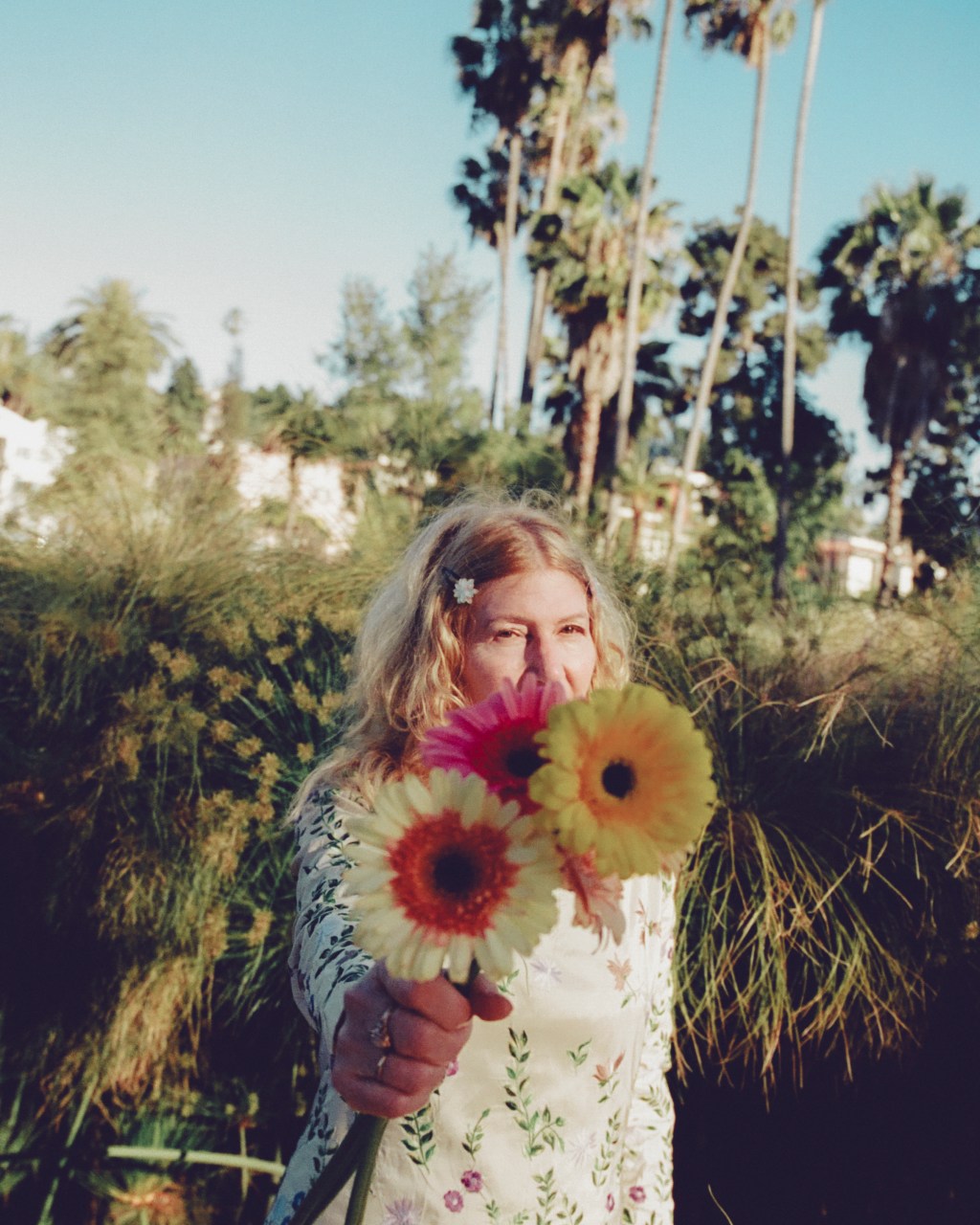
Robin Schorr’s daughter was reading The Alchemist, and Schorr kept leaving the room to cry.
It was 2019. Schorr had spent twenty years in the film business, working her way from development assistant to running production companies and raising money for one of her own. A miserable experience on a movie had left her angry and sad, and Paulo Coelho’s novel, with its message about finding your purpose, was proving unusually hard to get through.
“I would read with her, go in the other room and cry because I knew I had never found my purpose and I would die a coward,” Schorr told New York Hours in an interview. “I loved film but it was never my dream.”
Seven years later, Schorr, who records as Blond in Car, has an album, Glider, produced by Jay Som, with a guest appearance by Missy Dabice of Mannequin Pussy. On Wednesday, October 28, she will play it in full at Baby’s All Right in Williamsburg, at one of her first headline shows. She wrote her first song at fifty-eight.
Music had been part of her life for years: classical piano lessons, choral singing, a spell as a college D.J., and a lasting attachment to indie rock. But making records seemed to belong to another class of people. She thought of Kurt Cobain, she said, and could not imagine herself in the same occupation.
She meditated. She cried. She decided that, at least, she wanted to learn guitar. Her then-husband showed her three chords, whereupon she began hearing songs in her head. They kept her awake. Driving along Olympic Boulevard in Los Angeles one day, listening to country radio, she had an idea: she could write songs for country singers, even if she did not yet regard herself as a performer.
“I came home and said, I know what I’m doing for the rest of my life: I am going to be a songwriter,” she said. She quit film the next day.
For a while, she tried country songwriting and toplining, writing melodies and words for existing tracks. Eventually she began making music under her own name, Blond in Car. Her career did not begin with a record-label meeting or a showcase. It began, largely, on her phone.
A family song
The song that introduced many listeners to Schorr was “My High Gummygirl,” a fond, funny account of her daughter. The idea came during parents’ weekend at her daughter’s college in Boulder, Colorado. Schorr and the family had gone to a football game, where it was hot and boring, and had eaten gummies. Schorr asked what concert her daughter and her then-boyfriend had seen the previous evening.
“We saw Sinatra or what the fuck,” her daughter answered, apparently meaning the symphony.
Schorr knew she had a lyric. “Symphony” suggested “Tiffany,” which reminded her of a silver ring she had bought her daughter at a flea market. The ring was slightly too small, but her daughter had twisted it onto a finger anyway. Schorr began building a song from these scraps of family life.
“Sometimes this happens, the whole song just kind of blossoms in your mind,” she said. “I adore my daughter and this just poured out of me fairly easily.”
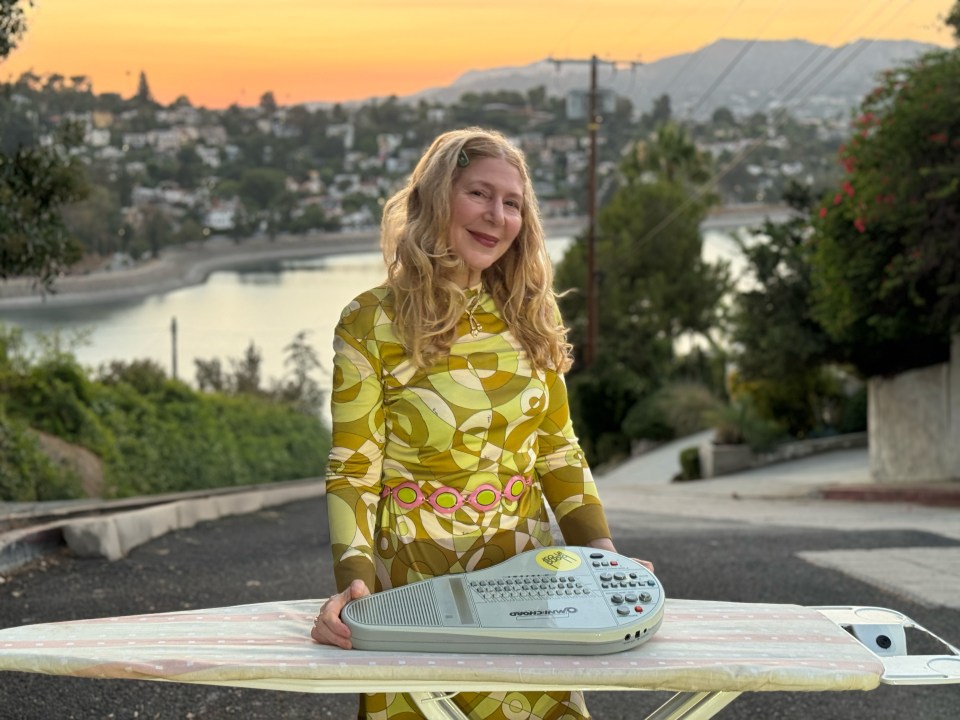
A video of Schorr singing the song while playing an Omnichord on an ironing board in her kitchen went viral. She had found a way to make a record of maternal affection that was both tender and happily indiscreet. It sounded like no particular attempt to become a pop star.
A strange little instrument
The Omnichord, a portable electronic instrument with buttons for chords and a touch-sensitive strumming strip, had been an accidental discovery. Schorr had continued to struggle with guitar when she noticed one in the corner of a producer’s Instagram photograph. She watched demonstrations on YouTube, searched Craigslist, and within an hour found herself at Starbucks paying four hundred dollars for a mint-condition OM-84.
She thought she might take it to open-mic nights. Instead, she started recording covers for TikTok. The clips caught on, and musicians began inviting her on tour before she ever got around to the open mics.
“I think people love Omni because it sounds so cool and goes well with my voice,” she said. “I think the videos are popular because I’m so happy I get to make music and I think that just comes across.”
Social media brought more than an audience. Schorr said she first connected with Jay Som, the musician and producer Melina Duterte, by sending her messages. Missy Dabice, whose band Mannequin Pussy had long impressed Schorr, began liking her posts; the two exchanged messages, and Schorr covered the group’s song “I Don’t Know You.”
Schorr and Duterte assembled ten tracks for Glider. A friend suggested asking other musicians to appear on the record. It had not occurred to Schorr. She contacted friends, who agreed to participate.
She particularly wanted Dabice on “Bad Dad,” then worried that Dabice might not identify with its subject. Schorr read interview after interview and discovered that Dabice was devoted to her parents. Perhaps she had made a mistake.
But Dabice liked the song. Despite a punishing touring schedule, she also came to shoot the video. For Schorr, a musician whose songs she had admired had become a collaborator.
“Almost everyone I know in music has come from social media,” she said. “Say what you will but I love and will always be grateful to social media!”
Starting late
Schorr is frank about the years she spent doing something else. The music industry remains preoccupied with youth, and she knows that she looks different from many of the artists with whom she performs. She has found that the difference is useful. She has less patience for being embarrassed by a bad photograph, intimidated by a new situation, or hesitant to contact someone she admires.
“I am an old person and I don’t have time to waste,” she said. “I have one life and that’s it and I’m so ridiculously lucky to have found my purpose just before it’s too late.”
She wishes she had discovered songwriting earlier. Yet she doubts that her younger self, whom she remembers as insecure, could have handled any of this. “I never thought I would be a singer, a songwriter, a performer or an influencer!!” she said.
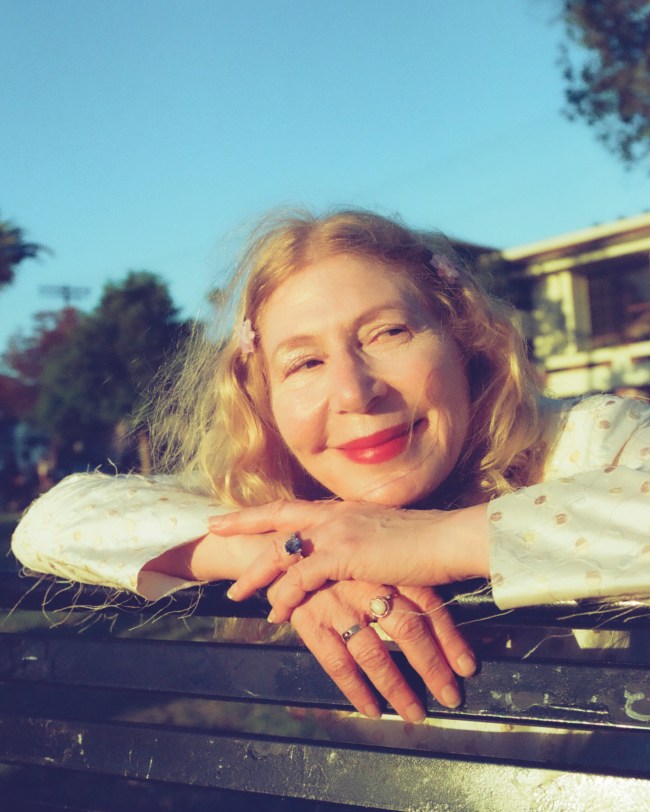
At Baby’s All Right, Schorr intends to play the entire album in sequence, with projections she has made for each song. She knows that, once the release shows are finished, only a few songs may remain in her live set. For now, she wants every track to have its night.
The Brooklyn show and concerts in San Francisco and Los Angeles mark her first headline engagements. For a woman who once believed that music belonged to other people, the occasion is large enough to make her anxious and delighted at once.
“I love all the songs on the album and am so happy that they will have their moment in these shows,” she said. “It’s the biggest thing I have ever done. Til now!”
Blond in Car plays Baby’s All Right, 146 Broadway, Williamsburg, on Wednesday, October 28. Glider is due in November.

