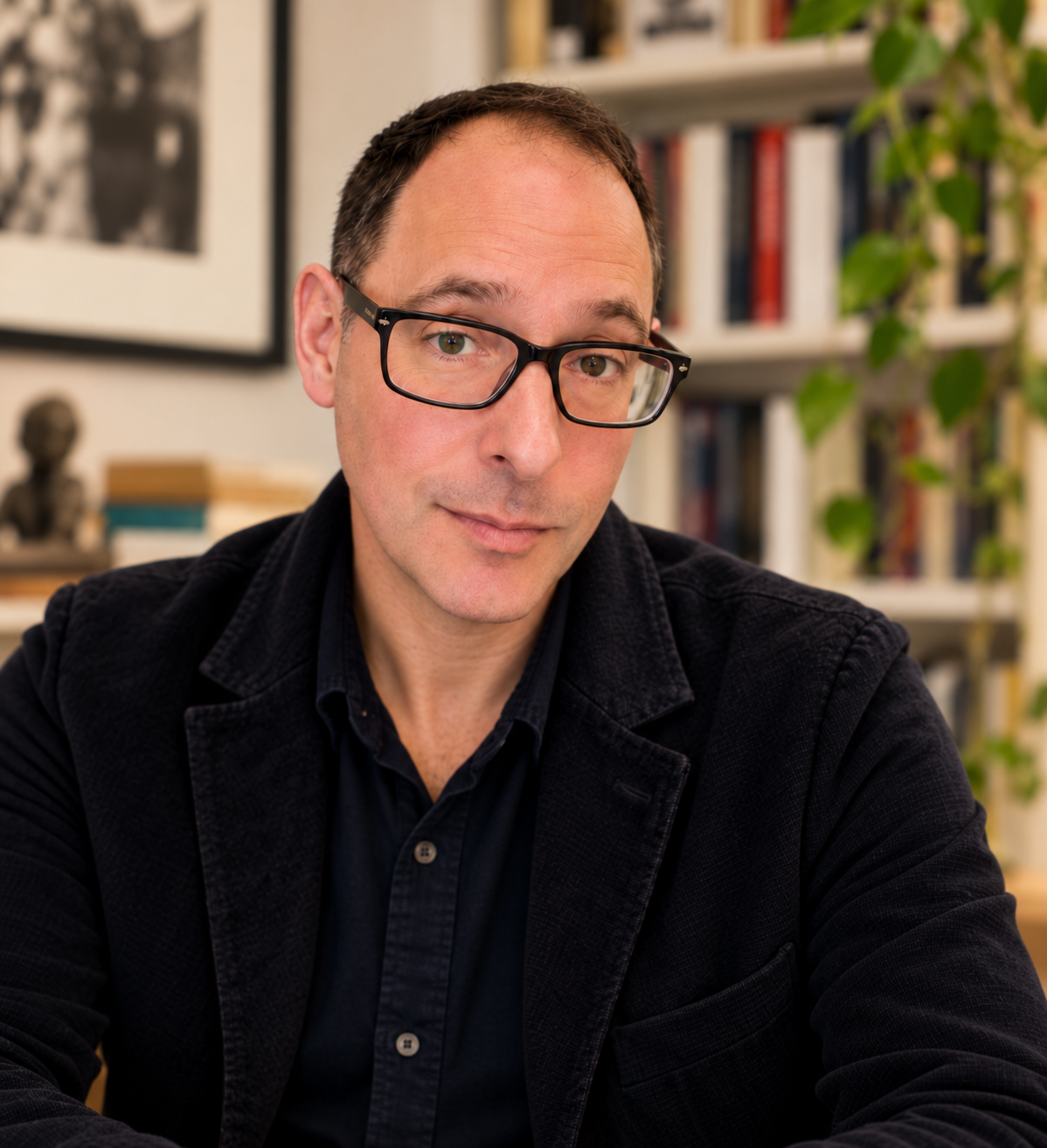
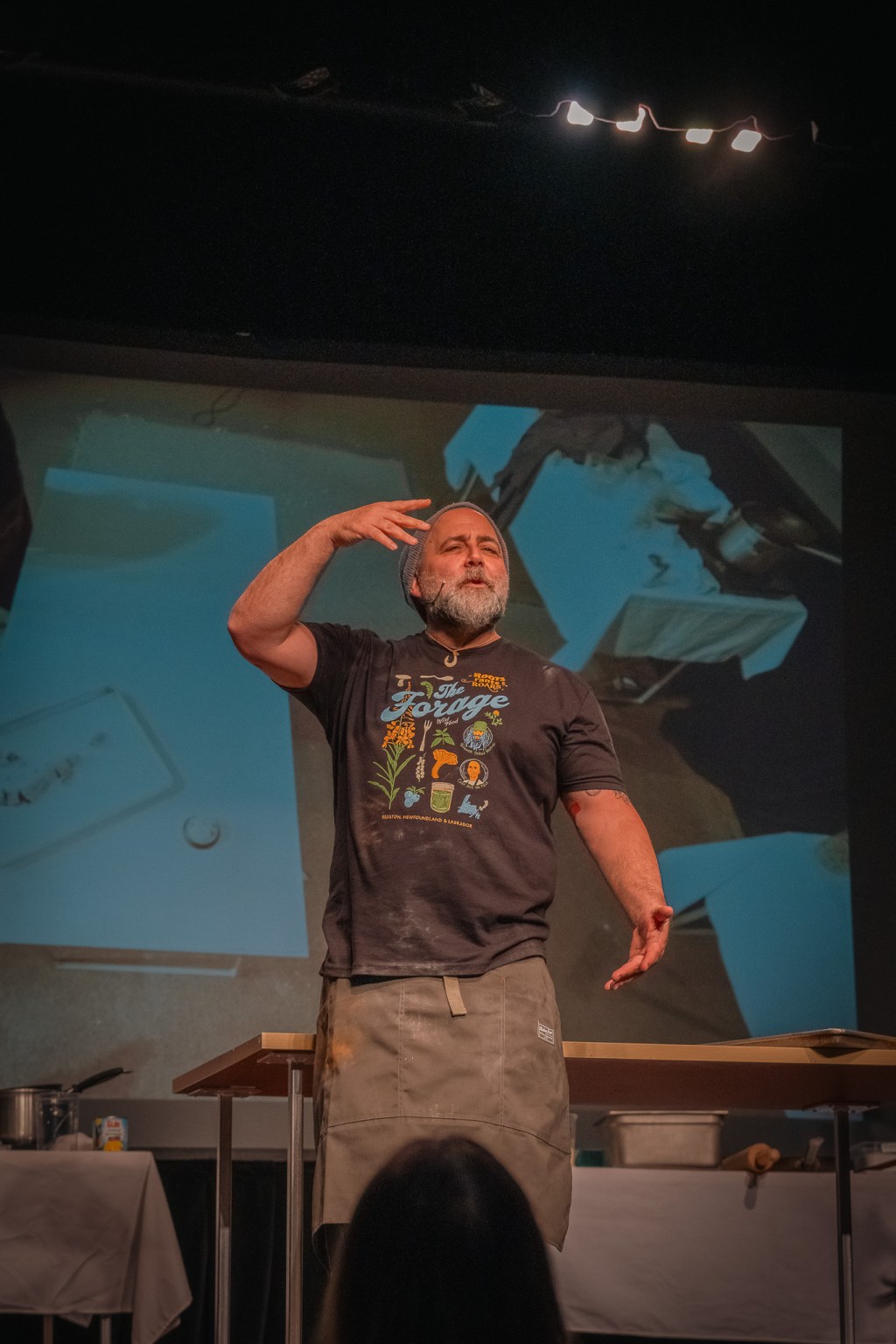
Duff Goldman. Photograph courtesy of his publicity team.
Duff Goldman has been chased by police through a train yard at two in the morning, spent time in jail and, on one occasion, bronzed a dead bird. His grandmother was friends with Georgia O’Keeffe. Among his ancestors were Russian-Argentine gauchos who operated a bar in Patagonia. On November 3, at City Winery in Manhattan, he plans to make apple strudel.
The strudel belonged to his great-grandmother, or rather the recipe did. Goldman, the pastry chef who became famous on the Food Network for making cakes that looked like virtually anything except cakes, has decided to try his hand at a different kind of performance. His new one-man show, The Tao of Duff, combines cooking, family history and stories from a career that has taken him from graffiti-covered train yards to television celebrity.
Goldman is particularly interested in what happens when people put down their phones and pay attention to someone making something with his hands. For a man whose fame depends largely on television, this represents an intriguing change of emphasis.
“We are living in a time of robot overlords that have decided what we will do and see and believe and so much of our lives are spent looking at little screens,” Goldman told New York Hours in an interview.
His proposed remedy is to invite an audience, figuratively speaking, into his kitchen.
“I thought it would be nice to invite people to hang out in my kitchen and watch me make my great grandmothers apple strudel while we laugh and tell jokes and stories,” he said. “No screens. 100% analog old-fashioned storytelling.”
The ambition is almost quaint. Goldman made his name on Ace of Cakes, the Food Network series that followed the activities of Charm City Cakes, his Baltimore bakery. The cakes were architectural projects disguised as desserts. They took the form of buildings, animals, vehicles and elaborate sculptures, often requiring the skills of carpenters and engineers as much as pastry chefs. The show made an entertainment of the elaborate business of getting these objects to stand upright.
But the essential attraction was not simply the finished cake. It was watching people work. The measuring, arguing, improvising and occasional catastrophes gave the show much of its charm. What looked like television spectacle was also a portrait of a workshop.
Goldman seems to regard this distinction as important. The new show, he explained, grew out of his desire to understand how generations of his family had found satisfaction in making things.
For much of his career, strangers have told him that he inspired them through his baking, art, comedy or business ventures. Rather than offer a collection of professional maxims, Goldman decided to investigate the family habits that might explain his own.
“I wrote the Tao of Duff as a way to try and explain how my family stretching back to my great grandmother and beyond have always been craftsmen and artists,” he said.
One suspects that his family has supplied him with rather more material than he can fit into a single evening.
There is the grandmother who knew O’Keeffe, a figure whose presence suggests an unexpectedly intimate connection to the history of American modernism. There are those gaucho relatives running their bar in Patagonia. Then there is Goldman himself, who, before his television success, was a young graffiti artist learning to navigate the less hospitable corners of urban life.
He still enjoys telling stories about those years.
“I feel like being a graffiti writer as a kid prepared me for so much of life,” he said. “Not much is scary after getting chased by cops through a train yard at 2 am.”
The connection between graffiti and pastry may be less improbable than it first appears. Both demand confidence, control of materials and an ability to envision a finished object before it exists. Both can involve elaborate work destined to disappear. Graffiti gets painted over. Cakes get eaten. In neither case does permanence necessarily measure achievement.
Goldman’s career has also taught him something that was presumably less useful while running from the police: patience.
“I think the biggest change throughout my career has been my patience,” he said.
It is an odd virtue to associate with the frantic pleasures of food television, where time is routinely converted into dramatic tension. Yet pastry making is full of processes that resist haste. Dough must rest. Butter must remain at the proper temperature. Sugar behaves according to its own rules. The baker who mistakes speed for mastery generally has an unhappy afternoon.
Goldman speaks about patience with something approaching reverence.
“Patience comes from trust,” he said. “Trusting the process, trusting the masters, and trusting yourself.”
His reflections on craftsmanship have led him toward an unexpected theatrical model. The inspiration for The Tao of Duff was not another chef, but John Leguizamo, whose autobiographical one-man show Freak made family history, youthful humiliation and the business of growing up into material for the stage.
Goldman considers Leguizamo’s willingness to expose himself emotionally, without surrendering his comic swagger, a model worth attempting to follow.
“His one man show ‘freak’ was not only the inspiration for my own show but honestly for how I deal with most of life,” Goldman said.
He admires, in particular, Leguizamo’s ability to be vulnerable without appearing to lose command of the room.
“I’m much less cool, though,” Goldman added. “And he’s a way better dancer.”
There is a considerable difference between making an audience admire an elaborate cake and persuading it to listen to stories about one’s family. Television rewards visual surprise. Autobiographical theater depends on the less reliable machinery of memory, personality and revelation. Goldman has a collection of anecdotes unusual enough to attract attention, but their success onstage will depend on whether he can make the audience care about the people who inhabit them.
Perhaps that is why the strudel matters.
Of all the things Goldman could make before an audience, he has chosen a pastry associated not with his celebrity but with his childhood inheritance. The recipe connects the famous baker to a woman who practiced her craft long before anyone thought of turning cake decoration into television entertainment.
A strudel can be made with relatively modest equipment, but it requires skill and an intimate familiarity with dough. The preparation rewards exactly the patience Goldman has come to prize. One can follow a recipe, but there are details of pressure, texture and timing that resist complete description. They are often best learned from another person.
In the peculiar family history Goldman proposes to recount, the strudel may be the least exotic element. It is also likely to be the most revealing.
Goldman himself found fame by turning pastry into spectacle. Now he appears curious about something smaller and more durable: the pleasure of doing a thing well, even when nobody is recording it.
The irony, of course, is that the audience at City Winery will be watching a television star demonstrate the virtues of a life less mediated by television. But Goldman seems entirely comfortable with the contradiction.
What he wants, ultimately, is to offer an evening of the sort that might once have taken place around a family kitchen table, with stories growing more extravagant as the night progressed and someone working at the counter while everyone else listened.
There will be a famous chef, a few improbable relatives, memories of encounters with the law and, eventually, something to eat.
And for at least a little while, Goldman hopes, nobody will be looking at a screen.
Duff Goldman presents The Tao of Duff on November 3 at City Winery, 25 11th Avenue, Manhattan. Tickets and information.