
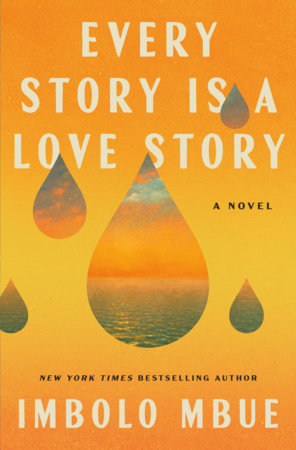
Three years after his wife died in a car accident, Wolo receives a letter from the person who was driving. The letter asks something of him that he has not agreed to give. Grief has already required him to make a kind of peace with the irreversible, and now a stranger wishes to enter the arrangements he has made around his loss.
In Every Story Is a Love Story, Imbolo Mbue gives this predicament a troublesome human particularity. Wolo has gone back to work. He sees friends. The older women in his family have begun trying to introduce him to potential partners. These ordinary activities do not amount to recovery, exactly, but they allow the days to proceed. The letter threatens to make them strange again.
The dead woman has a name, Yoma, and she was pregnant with twins when she was struck during a run. Wolo is a Cameroonian immigrant and an economist living in the New York area. The accident has not merely deprived him of a marriage; it has erased two children he never got to meet. The family’s grief therefore concerns a vanished future as much as a lost person. For relatives who remember the anticipation of those births, Victoria’s sudden appearance can look less like contrition than another intrusion.
Its writer is Victoria, whose car killed Wolo’s wife. The family responds as families often do when they believe that protection requires certainty. A pastor regards the correspondence as a dangerous temptation. Wolo’s mother forbids discussion of it. His father’s second wife, calling from Cameroon, advises him to destroy it. The advice comes from several directions but arrives at the same conclusion: do not let this woman into your life.
The legal aftermath is also part of the injury. Victoria, a white woman, was not prosecuted. Wolo’s relatives suspect that privilege helped her escape punishment. His own doubts are more particular: he wonders whether the investigation concealed something. Learning that Victoria was a commercial airline pilot, not the flight attendant he had imagined, gives him another reason to question what he has been told. Their first conversation, according to early accounts of the novel, does not produce an understanding. The two remain furious and miserable, which may be the least surprising outcome of their meeting.
Wolo nevertheless agrees to meet her. The publisher’s description emphasizes Victoria’s remorse and his unexpected response to it. The encounter creates a moral difficulty that is much less easily solved than the choice of whether to open an envelope. What, after all, would forgiveness signify? It cannot restore his wife, nor can it undo the negligence or accident that took her life. It might relieve some part of his suffering; it might ask him to carry a burden that belongs to someone else.
There is an important distinction between wishing to be forgiven and wishing to make amends. The first concerns the person who has done wrong; the second ought to concern the person who has been hurt. Yet an offer of restitution may also introduce an unwelcome obligation. When Victoria proposes an extraordinary gift, Wolo faces the humiliating possibility that her money or resources could change his life. Accepting it would not necessarily mean absolving her. Refusing it would not necessarily honor Yoma. Even deciding which is the generous act becomes difficult.
Mbue, who was born in Cameroon and lives in New York, previously wrote Behold the Dreamers, about an immigrant family caught in the American financial crisis, and How Beautiful We Were, about a village confronting environmental devastation. Both books attend to the pressures that institutions and other people place upon private lives. Her latest novel begins instead with a private catastrophe and asks how much of it another person can possibly understand.
The question reaches backward into Wolo’s own family. Mbue’s novel, as described in early critical accounts, discloses older injuries and competing ideas of duty among relatives in Cameroon and the United States. A transatlantic family can be wonderfully attentive to its members’ lives while offering them very little solitude in which to make decisions. Telephone calls cross the ocean bearing advice, impatience and affection. Wolo’s predicament belongs to the entire family, although the consequences will be his to endure.
The temptation in fiction about reconciliation is to make mercy seem either obligatory or ennobling. The situation Mbue has devised resists those easy conclusions. A bereaved husband is not a moral instrument designed to absolve someone else. He is a man whose life has been interrupted, and who may be capable of another, unforeseen beginning. That makes the question of what he owes Victoria inseparable from what he owes himself.
Book details: Imbolo Mbue, Every Story Is a Love Story · Random House · October 6, 2026 · 352 pages · ISBN 9798217154777. Publication information.

