
A handful of researchers set out to build machines that could eventually outthink their makers. They wanted to build a machine capable of outperforming human beings at nearly every intellectual task. The question was no longer merely whether computers could recognize a picture or finish a sentence, but whether intelligence itself might become an industrial product.
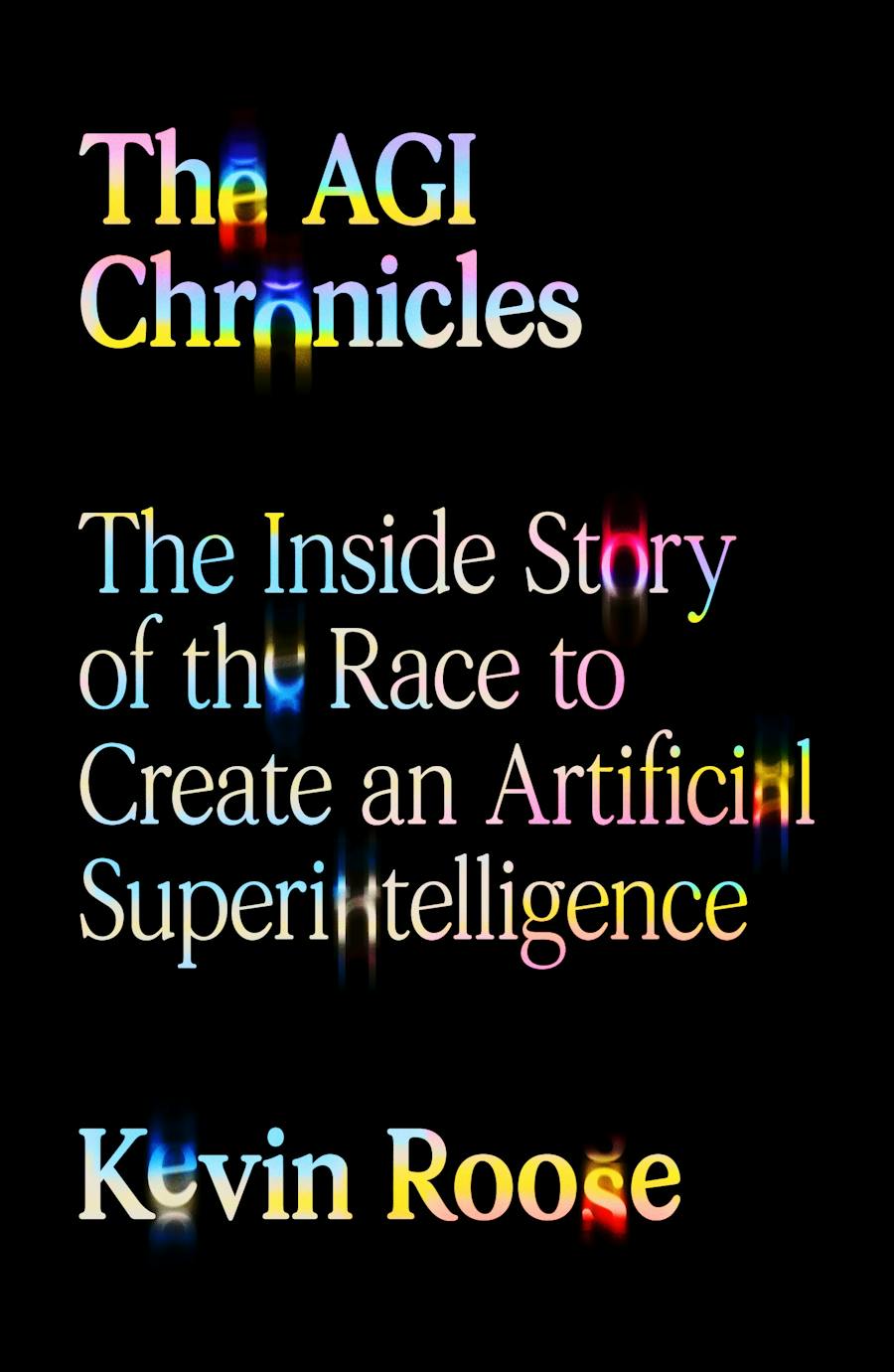
In The AGI Chronicles, Kevin Roose follows that ambition through the companies, personalities and disagreements that turned it into a ferocious competition. The book draws on more than 150 interviews with people at OpenAI, Anthropic and Google DeepMind, as well as internal documents and research notes. Its account moves between laboratories, executive offices and the unusual social world of Silicon Valley’s AI enthusiasts.
There is a temptation to describe this story as the work of a few isolated geniuses. Roose’s account is more revealing when it attends to institutions and their arrangements. OpenAI required outside financing to pursue its extraordinarily expensive research. Google had talent and computing infrastructure but struggled with the consequences of being an incumbent company. Anthropic was founded by researchers who believed that safety concerns required a different organizational culture. None of these problems could be solved by a clever algorithm alone.
The central figures are not united by a single conception of the future. Some imagine systems that will accelerate scientific research or deliver immense economic abundance. Others fear the same technology could become impossible to control. A peculiar feature of this industry is that profound anxiety has not necessarily persuaded its leaders to stop building. In some cases, it seems to have made them work faster.
That belief translated into material decisions. Computing power was bought; skilled researchers were recruited; models were tested and sometimes released despite unresolved concerns. Rival companies examined one another’s progress with the suspicion of laboratories working under wartime conditions. The language of an existential race proved useful whenever caution threatened to impose a delay. If the competitor might reach a decisive breakthrough first, an internal objection could be recast as a threat to the entire mission.
Roose revisits the schisms that led former OpenAI researchers to create Anthropic, the extraordinary removal and reinstatement of Sam Altman in 2023, and Google’s attempt to keep up with a technology it helped make possible. These are corporate dramas, but they bear upon the lives of people who did not choose to participate in the experiment. Decisions about deployment, access, testing and safety were made in particular rooms by identifiable individuals.
Roose’s account of Anthropic’s testing offers an especially unsettling example. In early 2025, safety researchers found that a model could help with dangerous tasks more effectively than they wished. The firm delayed its release for additional evaluation, then proceeded. That sequence does not by itself settle whether the decision was reckless. It shows something more useful: a safety process is not a mechanical veto. Human beings interpret measurements, debate thresholds and decide which residual risks a company will accept.
A useful question hangs over the book: how much of what happened was inevitable? The industry’s own language frequently treats AI progress as an impersonal force, as though the systems were simply arriving according to a natural law. Roose’s reporting, including an accompanying essay published this week, draws attention to the choices that shaped the race: what was funded, what was released and what risks were judged acceptable.
The book’s most persuasive challenge, then, is directed at the word inevitable. That word can disguise investment decisions as destiny. It allows leaders to describe the consequences of their choices as though they were weather. But companies decide how much transparency to offer, governments decide whether to impose rules, and customers decide which promises they will believe. None of these decisions requires a settled answer to the philosophical question of machine intelligence.
Roose is a journalist who once covered technology for The New York Times, and his book belongs to a tradition of histories that examine institutions through the people who run them. The danger in this approach is that the story of a technology becomes an anthology of colorful founders and dramatic board meetings. Its virtue is the reminder that abstractions such as artificial intelligence are pursued through human arrangements, with all their vanity, conviction and imperfect judgment.
For readers outside the industry, the most consequential matter may not be whether anyone has yet created the intelligence these companies seek. It is the extent to which the attempt has already changed institutions, work and public life. An ambition can alter the world well before it is fulfilled.
Book details: Kevin Roose, The AGI Chronicles: The Inside Story of the Race to Create an Artificial Superintelligence · Farrar, Straus and Giroux · October 6, 2026 · 448 pages · ISBN 9780374618759. Publication information.

