
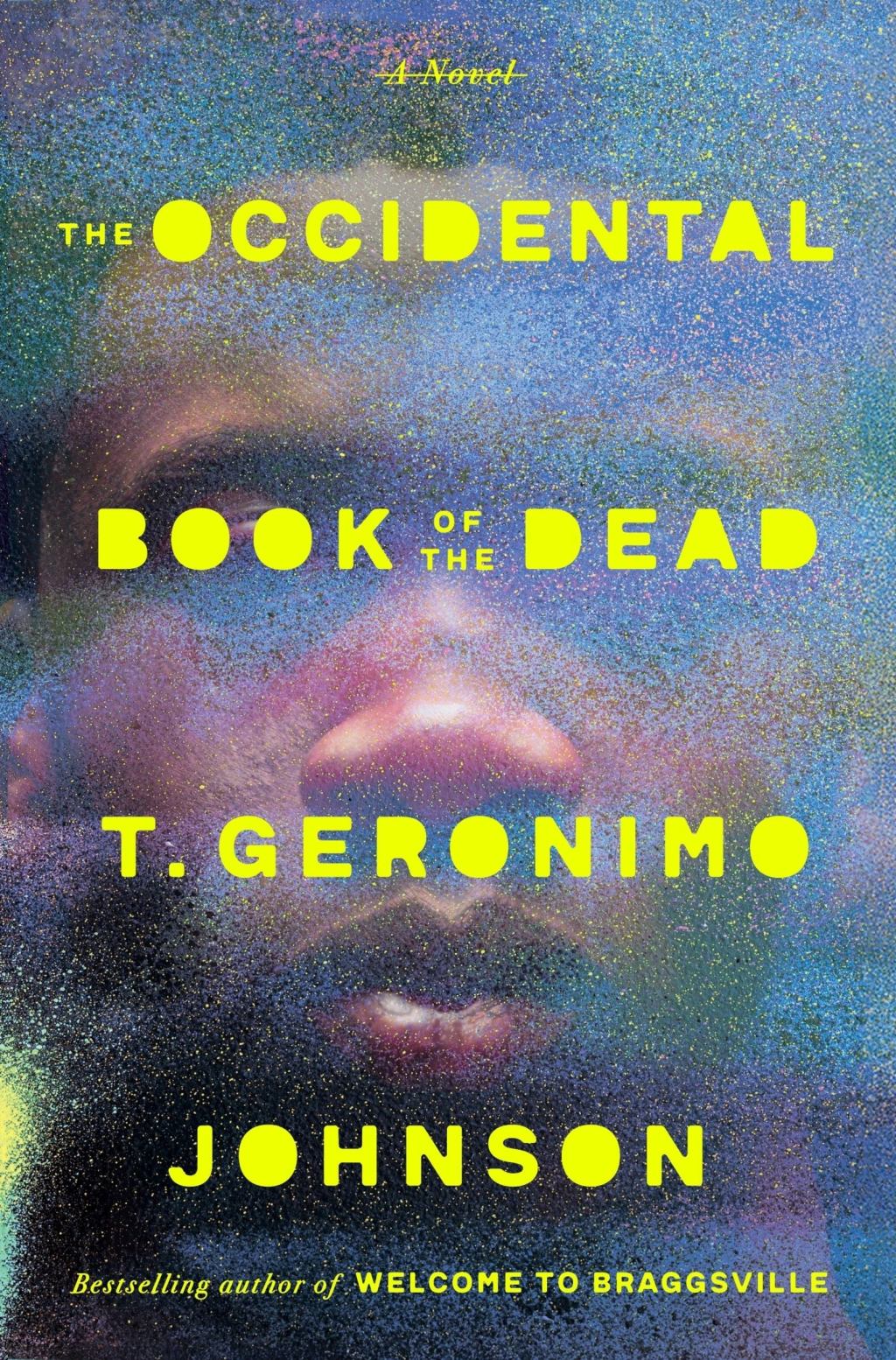
George Washington Jonson has worked hard to leave the place where he grew up. He was raised in one of Atlanta’s poorest housing projects, served in the Army and came home to join the police. By the time T. Geronimo Johnson’s new novel turns toward its central reckoning, he has acquired a comfortable suburban existence with his white wife and stepson.
In The Occidental Book of the Dead, Jonson’s professional success is inseparable from the contradictions he would prefer not to examine. It is 1992 when he begins patrolling familiar Atlanta streets with a veteran white officer who calls himself a redneck. Over the following decade, Jonson becomes a man responsible for training new recruits while continuing to police the neighborhood from which he once hoped to escape.
Atlanta is an essential part of the story. The city has long celebrated the political and economic achievements of its Black middle class, even while the lives of poorer Black residents could remain precarious. Jonson’s ascent belongs to one version of that history. He has entered a respected profession, secured a home in the suburbs and acquired the outward proofs of stability. But the institution that provides his salary also helps determine the terms on which people in his old neighborhood are permitted to live.
The social distance is small enough to travel by car and large enough to transform a life. Jonson knows the language, habits and anxieties of the community in which he works. He also belongs to an institution that has often regarded its residents as suspects. His white partner offers guidance and access, but the relationship carries compromises of its own.
The years after 1992 bring their own unsettled political atmosphere. The beating of Rodney King and the uprising in Los Angeles made police violence a matter of nationwide public reckoning. Yet the daily practices of law enforcement were sustained by offices, supervisors, partners and unrecorded exchanges that attracted little attention until something went wrong. A novel about those ordinary arrangements has room for compromise that a newspaper headline cannot easily describe.
Johnson, whose earlier novel Welcome to Braggsville was longlisted for the National Book Award, is drawn to the uncomfortable space between an individual’s intentions and the systems within which those intentions operate. The new book’s sprawling form, running to more than six hundred pages, allows the contradictions of a career to accumulate rather than resolve themselves in one revealing incident.
Jonson’s white partner is not merely an antagonist introduced to give the hero something to oppose. A seasoned officer can teach a younger colleague how to survive the work, how to interpret orders and which mistakes command the greatest punishment. The same professional intimacy may transmit prejudices that nobody in the patrol car is eager to name. Respect, dependency and suspicion can occupy the same relationship, particularly when one man has power over the other’s future.
The plot is set in motion by a highly publicized killing. Its consequences threaten Jonson’s accommodations with colleagues, family and neighborhood alike. The premise offers something more complicated than a conventional police procedural: a protagonist whose desire for safety and respectability may have required him to look away from things he understood perfectly well.
The family waiting at home complicates Jonson’s loyalties. His white wife and stepson belong to the life he has built beyond the projects. They have their own claim on his time and allegiance. An officer who questions his colleagues risks more than professional embarrassment; he may risk the security of people who depend on him. The distinction between moral courage and imprudence grows difficult to maintain when a mortgage and a family enter the calculation.
Johnson’s choice of the 1990s matters. Its historical setting, however, places Jonson in the years following the Rodney King beating and the Los Angeles uprising, when the relationship between police power and Black citizenship was already being contested in full view of the country.
Jonson’s compromises do not arrive all at once. Compromise often consists of ordinary acts: a joke left unchallenged, an arrest interpreted generously for a colleague, a conversation postponed until it is too late to matter. Taken separately, each decision can be excused. Over years, they acquire the solidity of a character. By the time a spectacular event makes the pattern visible, its participants may find it difficult to imagine that they ever chose it.
The most intriguing question in Johnson’s premise is not whether Jonson will finally acknowledge the cost of his compromises. It is what acknowledgment can change after an entire adult life has been constructed around them.
The author has explored such ambiguities before. Welcome to Braggsville examined race and spectacle through a group of college students confronting the rituals of a Southern town. In his new novel, the distance between idealism and social reality is traveled by a working adult who has already made consequential choices. There may be fewer opportunities to begin again, but more reasons to suspect that beginning again is necessary.
Book details: T. Geronimo Johnson, The Occidental Book of the Dead · HarperCollins · October 6, 2026 · 672 pages. Publication information.

