
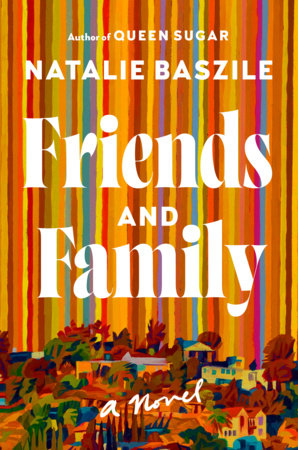
For ten years, Babs and Nora have been close enough to dispense advice on the most private matters. Their friendship began with their children and grew through morning walks, confessions and the small emergencies of family life. After a decade, they scarcely imagine that the friendship could end.
Then the police are called while their children are at home alone. Nathan, Nora’s adopted Black son, undergoes a traumatic encounter with officers. The aftermath makes the women’s familiar conversations suddenly inadequate. Babs, who is Black, sees a young man without the community that might help him make sense of what has happened. Nora, who is white, believes she has worked hard to understand racism and to raise her son thoughtfully. They discover that these are not the same understanding.
The police encounter changes more than Nathan’s sense of safety. It alters the meaning of a friendship that the adults have long thought of as proof of their openness. Their conversations about race once had a comfortable intimacy: Nora could ask questions, Babs could offer advice, and both women could regard the exchange as evidence of mutual trust. After an actual confrontation with police, that arrangement begins to look inadequate. The problem is no longer one that can be considered over coffee and then put aside until the next walk.
In Friends and Family, Natalie Baszile turns the resulting estrangement into a novel about the limits of intimacy. Its setting, an affluent Bay Area enclave, adds an uneasy social geography to the argument. Money can arrange a comfortable neighborhood, an attractive home and excellent schools. It cannot guarantee that a teenager will be safe from suspicion, or that his mother will recognize what he needs afterward.
Nora’s adoption of a Black child introduces obligations that love, however sincere, cannot satisfy by itself. Parents can offer devotion and still fail to recognize what is missing from a child’s world. Nathan needs more than assurances of unconditional affection. He needs places where he can speak about an experience his mother has not had and where the terms of conversation do not have to be explained before it begins. The welcome he receives from Babs’s family may feel like relief to him and like a repudiation to Nora.
Nathan begins spending time with Babs and her family, where questions of Black identity and culture are discussed openly. For Babs, this may be an opportunity to give the boy what he has been missing. For Nora, it threatens a bond that she regards as central to her motherhood. Loyalty to a friend and responsibility to a child are no longer easily compatible.
Babs is placed in a disagreeable position of her own. Helping Nathan threatens her closest friendship, while withholding that help would mean refusing a boy who needs it. She is also responsible for her own children and for the moral atmosphere of her household. The impulse to rescue a friend’s child can become entangled with the impulse to judge the friend. Baszile’s situation permits no simple separation of good intentions from wounded pride.
Baszile’s first novel, Queen Sugar, became the basis for Ava DuVernay’s television series. She subsequently edited We Are Each Other’s Harvest, a nonfiction collection on Black farmers and the land. Her return to fiction places familial allegiance inside the wider tensions of race and property, though here the rupture occurs not on a farm but between women who thought they knew one another.
One of the peculiarities of long friendship is that it develops its own private mythology. People remember the assistance they gave during a crisis, the embarrassing truths entrusted to them, the occasion when they were the only one to call. Such memories are valuable, but they can be used as arguments against present evidence. A friend who says she understands may be drawing on ten years of companionship when the person opposite her is speaking about something that happened yesterday.
A premise of this kind risks assigning one character the role of enlightenment and another the role of ignorance. The publisher’s account and early responses instead describe a novel attentive to both women’s failures and affections. Their friendship is genuine, and that is what makes the argument painful. A decade of shared secrets does not vanish because of one quarrel. Neither does it necessarily survive the discovery that love has meant different things to the people offering and receiving it.
Baszile has said, through her work as both novelist and editor, much about the networks that allow Black families to sustain themselves. In this story those networks are not abstract sources of cultural pride; they offer ordinary conversation, companionship and recognition. What counts as a family, the novel suggests, may be tested by the people to whom a frightened young man turns when he is least willing to be reassured.
Book details: Natalie Baszile, Friends and Family · Pamela Dorman Books · October 6, 2026 · 384 pages · ISBN 9780593492161. Publication information.

