
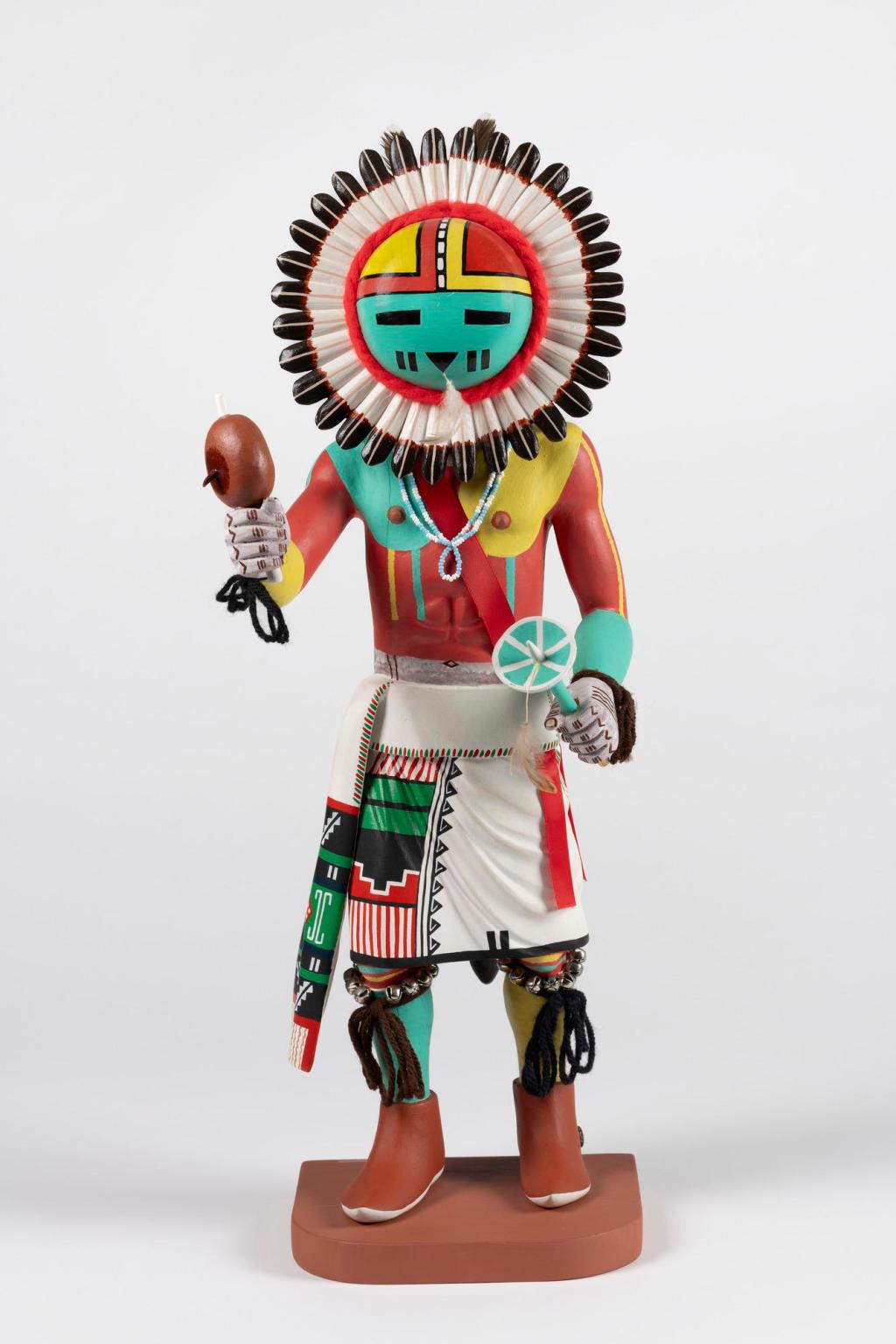
The brightly painted cottonwood figures at the Brooklyn Museum were never intended simply as objects to admire.
The Brooklyn Museum’s exhibition Hopi Kachina Dolls: Blessings for a Balanced World, which opened October 2, assembles dozens of brightly painted cottonwood figures alongside other objects relating to the lives and traditions of Hopi women and girls. The figures, often called katsina or kachina dolls, belong to a living cultural and ceremonial context rather than merely a history of decorative art.
That distinction matters in a museum setting. An object that can seem at first to be a miniature sculpture may also carry teachings about community, seasons and responsibility. The display offers an opportunity to look closely while remembering that a museum label can only introduce a much larger tradition.
The exhibition is scheduled to run through June 27, 2027.
Image: Brooklyn Museum collection: Hopi Taawa kachina doll; collection photograph. Source and further details.

