The Brooklyn-raised writer talks about the ghost of his father, Dominican folklore and the most ordinary bird in New York.
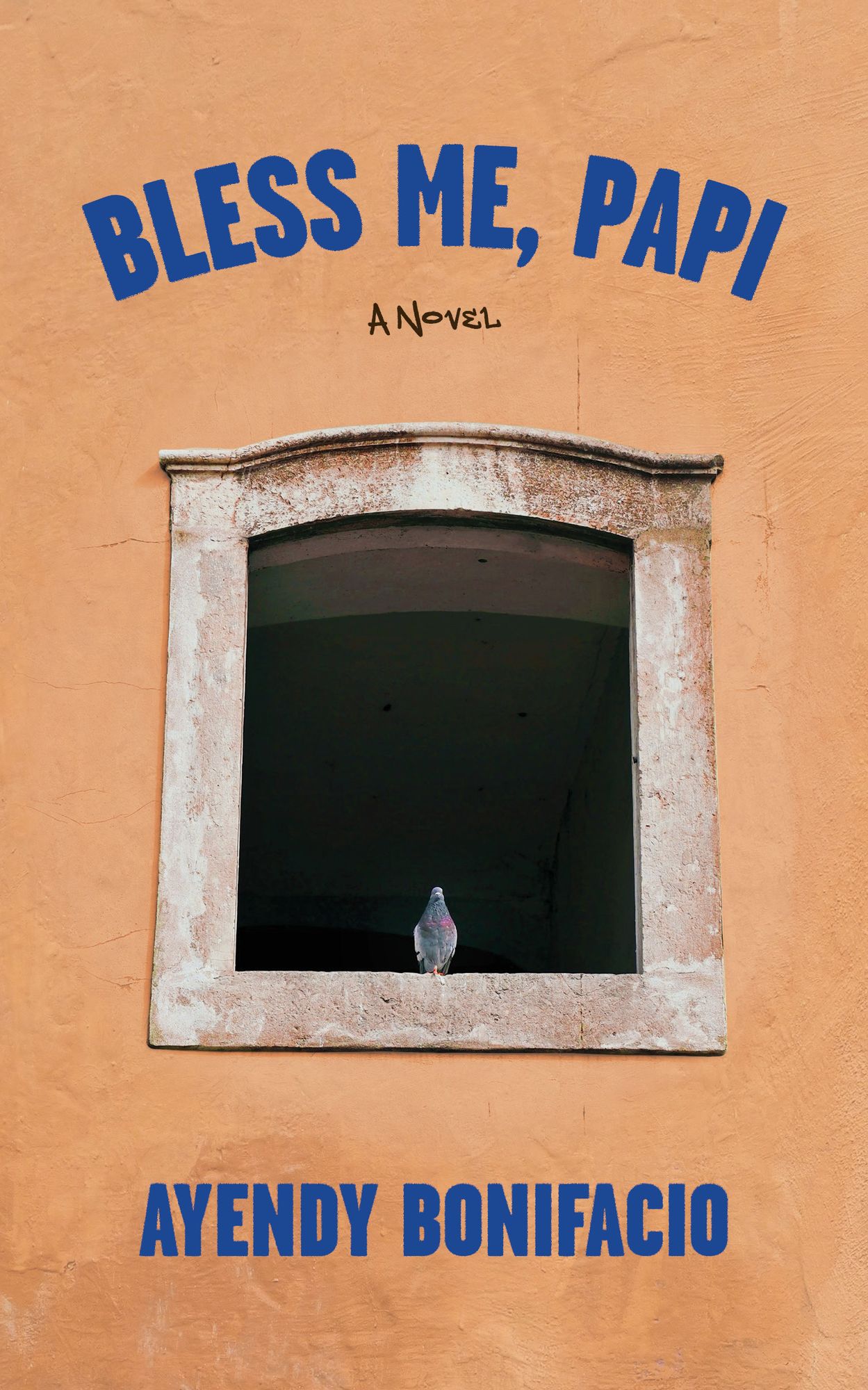
A pigeon is an unlikely messenger from the dead. In Brooklyn, where the birds congregate on sidewalks, rooftops and subway platforms, it is barely worth looking up when one appears. That is part of what makes the pigeon in Ayendy Bonifacio’s novel Bless Me, Papi such an unsettling visitor. For a Dominican American boy whose father has died of brain cancer, the familiar bird becomes something extraordinary: a possible return of the man he has lost.
The novel, published in August by Northwestern University Press’s Curbstone Books imprint, follows a boy known to his family as mijo through the streets of East New York and the hills of the Dominican Republic. Accompanied by a Brooklyn friend named Naño and a Dominican cousin named Matias, he pursues an explanation for his father’s ghostly appearances. What begins as a question about the supernatural becomes a more painful question about the living: how much of the dead can a person keep without surrendering his own future?
Bonifacio was born in Santiago de los Caballeros in the Dominican Republic and raised in Brooklyn. He now teaches English at the University of Toledo, far from the borough that shaped him. Yet the geography of his first novel returns repeatedly to the city of his childhood, where immigrant families make homes without leaving their earlier histories behind.

He is also a poet, memoirist and literary scholar. His books include To the River, We Are Migrants, a bilingual poetry collection, and Dique Dominican, a memoir examining family and immigrant life. He has written a scholarly study of nineteenth-century poetry in the American press. Across these different forms, questions of inheritance, memory and language recur.
Bonifacio initially imagined a different bird. In an interview with New York Hours, he explained that he had considered an owl, inspired by Rudolfo Anaya’s Bless Me, Ultima, the landmark Chicano novel in which an owl carries spiritual significance. The choice made literary sense, but something about it troubled him.
“The more I thought about my setting (Brooklyn, East New York and the Cibao region of the Dominican Republic) as well as the protagonist’s father (a traditional Dominican man), the more I realized that an owl would never work,” he said.
A pigeon, on the other hand, belonged precisely where the story takes place. New Yorkers tend to regard these birds with a mixture of indifference and hostility. They are scavengers and survivors, tolerated rather than loved, as much a fixture of city life as the elevated train.
But the pigeon also carries another history, one of peace, guidance and the possibility of divine intervention. Its ordinariness makes the transformation more disturbing. A bird that might have gone unnoticed yesterday becomes a reason to stop in the street today. The familiar city suddenly has the capacity to deliver messages from another world.
Bonifacio sees a connection between the bird’s compromised reputation and the experience of Dominican immigrants in New York.
“I wanted to connect the protagonist’s Dominican immigrant father, perhaps all Dominican-Yorks, to the complexity of this classic New York City bird,” he said.
The comparison is suggestive. Both the pigeon and the immigrant inhabit a city that has grown accustomed to their presence without necessarily considering the lives behind it. Both belong to New York even when others treat them as intruders. By choosing such an ordinary creature for the father’s return, Bonifacio gives the ghost a distinctly urban identity. This is not a spirit that requires an abandoned mansion or a distant forest. It can appear between apartment buildings.
The novel also belongs to a long tradition of literature in which the supernatural provides a language for experiences that resist ordinary explanation. Yet Bonifacio’s interest in ghosts is not simply a matter of borrowing from Dominican folklore or the conventions of magical realism. Its origins are more intimate.
He began writing Bless Me, Papi after his own father died of brain cancer. The resemblance between the author’s bereavement and his protagonist’s is significant, though the novel transforms that experience into a child’s quest.
“To me, losing a parent and the accompanying grief felt like a form of magical realism,” Bonifacio said. His father’s sudden absence seemed impossible, a fantastical rupture in everyday life. Everyone else, however, continued to behave as though the world had not changed.
There is something particularly cruel about that experience. A death can overturn the private universe of a family while barely interrupting the activity outside its door. Trains arrive, stores open, people argue over parking spaces, and the machinery of ordinary life continues. The bereaved are left to reconcile the catastrophe within themselves with the apparent indifference of everything around them.
For a child, that contradiction can be especially difficult to understand. If a father can disappear from the world, why should the world itself remain intact? And if everything else continues to exist, why should the father not be somewhere in it, too?
These questions animate Bonifacio’s premise. The protagonist does not simply miss his father; he encounters the possibility that his father remains present in a form that neither family nor reason can fully explain.
The two geographical settings add another dimension to the mystery. East New York and the Dominican Republic are not just contrasting backdrops, one urban and the other rural. Together they define the boy’s inheritance, a family history that extends beyond the borough where he lives.
The journey between them suggests that grief, too, can cross borders. The father is absent in both places, yet memory and folklore offer different ways of understanding what his absence means. The boy travels through landscapes shaped by family, language and stories that existed long before his own loss.
Bonifacio resists the suggestion that Brooklyn’s streets can communicate something about grief that families cannot. The distinction, he implies, is less important than the way a familiar place changes in the eyes of someone who is mourning.
“The streets and parks soak in my protagonist’s grief as we see both him and Brooklyn change throughout the novel,” he said.
That is an unusually persuasive way of describing the role of a city in fiction. Streets do not have to become sentient to absorb the emotional weight of the people who walk them. A corner where something once happened, a playground, a familiar storefront: each can acquire a private significance that remains invisible to everyone else.
The novel’s literary ancestry also matters. The echo of Bless Me, Ultima in its title and the author’s account of its development places Bonifacio’s story in conversation with an earlier coming-of-age narrative concerned with spirituality, family and cultural inheritance. But his decision to replace the owl with the pigeon marks a move away from a borrowed symbol toward one rooted in his own fictional world.
Ghosts have long provided novelists with a way to make history visible. In Juan Rulfo’s Pedro Páramo, a man reaches a town populated by voices of the dead. Toni Morrison’s Beloved makes haunting inseparable from slavery’s enduring violence. Bonifacio’s novel does not carry those books’ historical burdens in the same way. Its central loss is personal, and its search for an answer unfolds through a boy’s adventures. But it belongs to the same expansive understanding of a ghost: not merely something frightening, but someone whom the living cannot put aside.
Nor does the novel treat the Dominican Republic as an exotic source of magic set against a supposedly rational New York. The two places share the boy’s memories and his family’s stories. What changes is the form in which he encounters them. Bonifacio’s decision to put the supernatural in a pigeon makes Brooklyn as available to mystery as any landscape of folklore.
That choice also complicates a familiar story about immigrant New York. The city promises reinvention, but its residents do not arrive without a past. The dead cross the same borders as the living, at least in memory. The bird on the pavement becomes a small rebellion against the idea that an ordinary urban life must be free of old spirits.
Bonifacio’s writing has appeared in The New York Times, Slate and the Los Angeles Review of Books. In Bless Me, Papi, familiar questions of belonging meet another kind of dislocation: the loss of someone who helped make the world intelligible.
There is an appealing refusal of neat consolation in the novel’s central dilemma. According to the publisher’s account, the boy must eventually decide whether to release his father or accept what it means to remain haunted. The choice does not necessarily imply that forgetting is healthy or that remembrance is a burden. Rather, the story’s central tension lies in the difficulty of distinguishing a sustaining memory from an attachment that prevents life from continuing.
Perhaps that is why the pigeon seems such an apt invention. It belongs neither entirely to the ground nor entirely to the sky. It moves freely across boundaries that people cannot cross. Unlike the more majestic owl, it is neither rare nor particularly mysterious. Its significance depends on the eyes of the person watching.
For Bonifacio, the supernatural grew from the plain fact that his father’s death felt less believable than the possibility of his return. The boy’s imagination gives that feeling a visible form. As the author explained in the interview, the folklore of Brooklyn and the Dominican Republic is meant to reflect “the power of the protagonists’ imagination.”
And so the ghost comes back not as a spectacle, but as something a New Yorker might ordinarily pass without a second glance.
Bless Me, Papi, by Ayendy Bonifacio. Curbstone Books/Northwestern University Press, August 2026. 192 pages.

