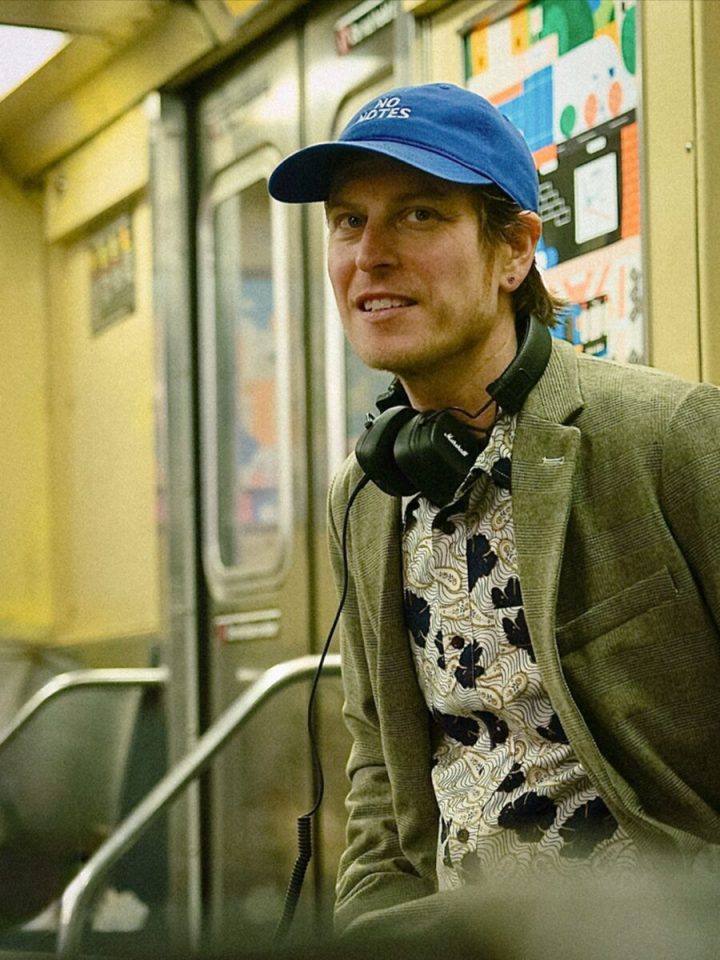
Noah Segan grew up on West 26th Street, between Broadway and Sixth Avenue, when wholesale flower sellers, an Indian restaurant and an electronics shop still occupied the block. There was a church on the corner. Across from his family’s building stood what was known as the Astor Counting House. The church survives. Much else has vanished.
“We were not wealthy people who lived in Chelsea at that time,” Segan recalled in an interview with New York Hours. “I’m pretty positive we couldn’t afford to live there today.”
Segan, an actor turned director with deep New York roots, has made a movie about a man who has suffered a similar fate. In The Only Living Pickpocket in New York, released last month by Sony Pictures Classics, John Turturro plays Harry Lehman, a practiced thief whose livelihood is disappearing one cashless transaction at a time. He is still deft with his hands; the trouble is that the wallets he lifts tend to contain credit cards that can be canceled within minutes.
Harry has a wife to care for and little money coming in. Then he steals a wallet containing a valuable USB stick and fences the device, bringing a crime family down on his head. The ensuing chase carries him across a city he knows intimately, but which no longer seems particularly interested in making room for him.
Segan, who wrote and directed the film, sees Harry as a workingman, albeit one with a less than legitimate trade. “He’s basically an artisan,” he said. “He’s an artisan with his hands.” Asked whom Harry resembles in contemporary New York, Segan mentioned teachers, artists and service workers, people who once could reasonably expect to live near the places where they worked.
He remembered another kind of expert: the yellow-cab driver before GPS. To hail one was to entrust yourself to someone who had spent years learning the city’s streets, often after working hard to obtain a medallion. The driver generally knew the route without consulting a device.
“That is an incredible skill that has vanished,” Segan said.

The movie belongs to a long line of New York pictures in which the streets offer both possibility and menace. Its crime plot recalls a scruffier city, although Segan is too young to be a filmmaker simply replaying the nineteen-seventies. His influences also emerge from the independent cinema in which he made his career.
He appeared in Rian Johnson’s debut feature, Brick (2005), a hard-boiled detective story transplanted to a California high school. The film helped begin a collaboration that has continued through Looper, Star Wars: The Last Jedi and the Knives Out films. Segan has become a familiar presence in Johnson’s work, sometimes in roles so brief that an inattentive viewer might miss him. Johnson and his producing partner Ram Bergman served as executive producers of The Only Living Pickpocket in New York.
In 2022, Segan directed his first feature, Blood Relatives, a vampire road movie in which he also starred as a loner who discovers that he may have a teenage daughter. The premise was supernatural, the discomfort thoroughly human. Parenthood upset the habits of a man who had arranged his existence around needing no one. Harry, in his own way, is another creature of habit, stubbornly loyal to a set of rules that the rest of the world has stopped observing.
For all its affection for old-fashioned skill, the new film was made with almost forensic attention to logistics. During preproduction, Segan covered the walls of his office on Court Street in downtown Brooklyn with subway maps, schedules and route diagrams. Anyone looking in, he said, might have thought he was hunting a serial killer.
The problem was Harry’s itinerary. Segan wanted every trip to work, down to the minutes spent changing trains. New Yorkers, he knew, would notice an impossible journey. He calculated where Harry could be, which train he would need and precisely when he would have to board it.
“All of the math in the movie of where Harry goes and how he gets there and how long it takes all checks out,” Segan said. There was one condition: Harry had to make every train.
“Which of course no one does,” he added.
Segan decided to grant his protagonist that single fantastic ability. Harry may be losing his place in the modern world, but he can still get anywhere in New York exactly when he means to. It is a superpower of which the average subway rider can only dream.
Other aspects of the production proved less susceptible to planning. On a day of filming in Chelsea, near the old Peter McManus bar, the crew needed a shot of Turturro emerging from a police precinct. They discussed putting a police sign on an ordinary building. Turturro had another idea: there was an actual precinct around the corner.
He proposed walking inside and asking permission. The crew tried to dissuade him. According to Segan, Turturro went anyway. The officers greeted him: “Hey, John.” He asked whether he could pass through their front door three or four times while a film crew worked outside. They agreed, provided he signed the book and posed for photographs.
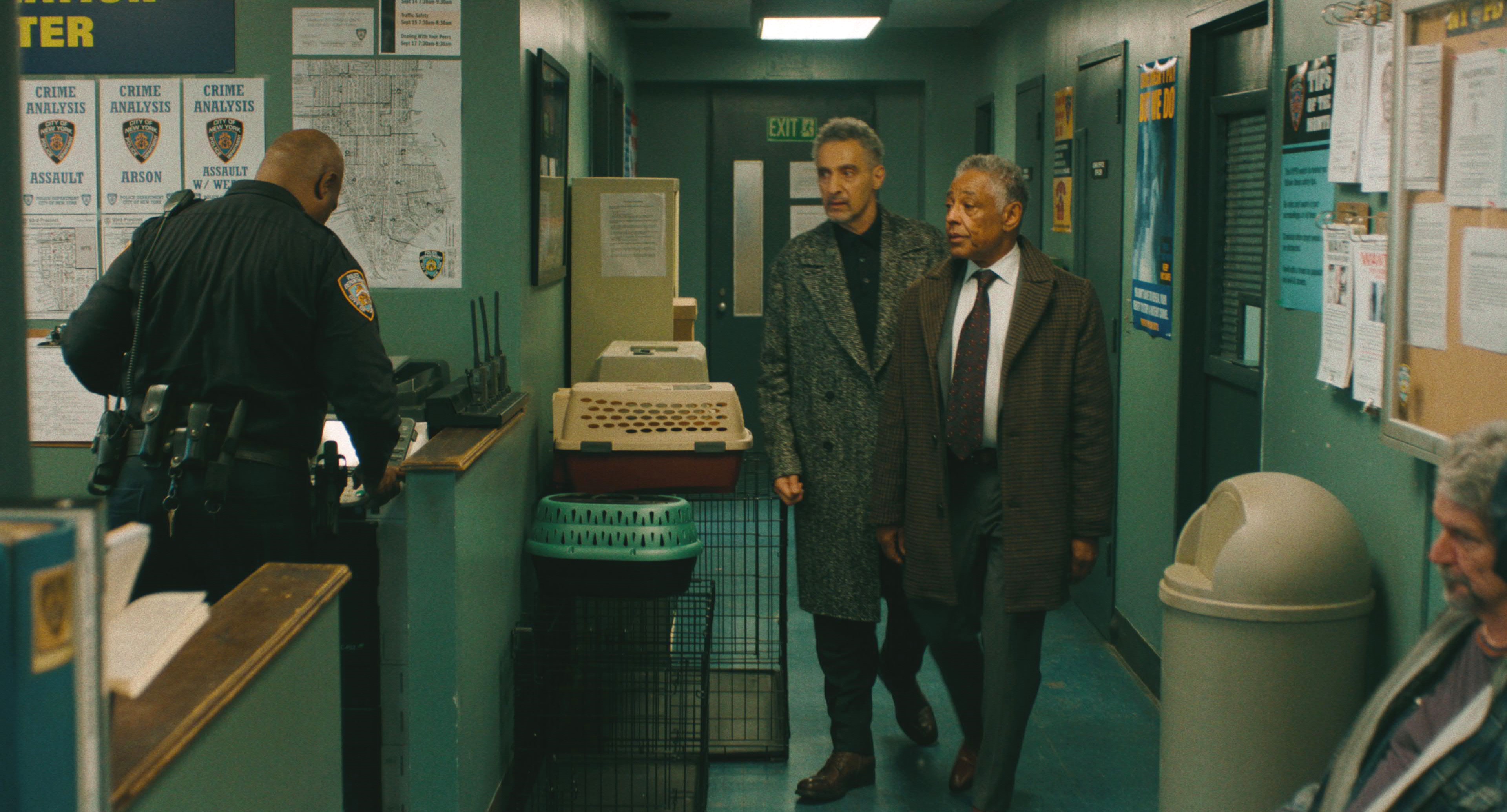
That, Segan suggested, is the peculiar pleasure of filming with Turturro in his hometown. He compared accompanying the actor through New York to walking through the savanna with a lion: people are impressed, but they know how to behave. Turturro rides the subway, and strangers greet him as if he were any other neighbor, which, in a sense, he is.
The ensemble includes Giancarlo Esposito and Steve Buscemi, actors whose faces carry their own history of New York movies, alongside Tatiana Maslany, Will Price and Victoria Moroles. The performers give Segan’s picture the texture of a city where nearly everyone seems to have crossed paths before. Buscemi and Esposito appeared together in King of New York; Esposito and Turturro were both in Do the Right Thing. Their presence evokes earlier eras without requiring the film to reproduce them.
Segan is wary, however, of treating the city as something that ought to have stopped changing when he was young. He remembers a Chelsea that working families could afford, but he also sees neighborhoods flourishing now, newcomers arriving and children growing up with streets to call their own. The question is whether they, too, will eventually be priced out.
He repeated something Turturro likes to say: “There is no foreigner in New York.” That, for Segan, is the part of the city’s character worth protecting, its capacity to take in people who come from somewhere else and allow them to become New Yorkers.
“You can try to price us out, you can try to gentrify us out, you can try to develop us out,” he said. “It’s never going to happen, man.” More New Yorkers, he insisted, will arrive, and their children will take their places.
Before the conversation ended, Segan offered one final recommendation. Ray’s Candy Store, on Avenue A, makes the best egg cream in the city, he said. It is an old shop, surviving by making something simple and making it well. Harry Lehman might understand.
The Only Living Pickpocket in New York opened in New York and Los Angeles on October 23 and nationwide on October 30. Segan spoke with New York Hours on November 16, 2026.

