New York’s Best · ★★★★★ · Critics’ Choice
At Sushi Koju, two chefs worked a few feet apart, making dinner piece by piece for the people seated in front of them. One was Atsuomi Hotta, who spent nearly two decades at Sushi of Gari. He worked with an easy manner, occasionally looking up from the fish to speak with a diner. There was no ceremony about it. Each piece arrived quietly, and the pleasure was in paying attention.
Sushi Koju occupies a small pocket of the Ace Hotel Brooklyn. Outside, the lobby was crowded with young, tattooed guests sitting over laptops and drinks in the dark. I passed through that lively room and took a seat facing the chefs, the lobby now behind me. The change was immediate. A few steps had carried me from the city’s usual hum into a place where the smallest movements mattered.
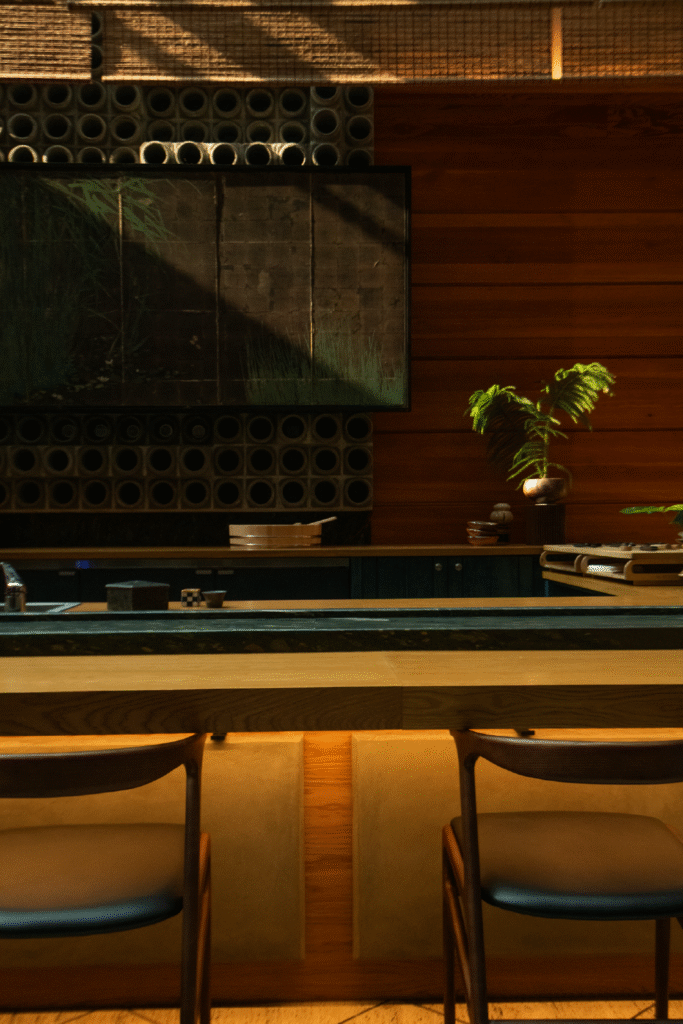
Hotta later ran Uotora, after his long stint at Sushi of Gari, where unconventional toppings became a signature. At Koju, he and his colleague were friendly and unhurried. They answered questions, then returned to their work. The rhythm of the evening came from the counter itself: a piece of fish prepared, passed over and eaten, followed by a little conversation before the next.
Vintage Japanese records played throughout dinner. Several couples appeared to be celebrating anniversaries. Their conversations rose and fell beneath the music, sometimes stopping altogether when a new piece of sushi arrived. I found myself wondering about the records. The sound gave the room a warmth that felt entirely its own, far from the studied bustle of the hotel.
Omakase means leaving the selection to the chef, and some New York counters treat that arrangement with an almost religious gravity. Koju was mercifully free of it. The chefs answered questions without breaking stride, and no one delivered a lecture about the proper way to eat. We could talk, listen to the records and let dinner unfold at its own pace.
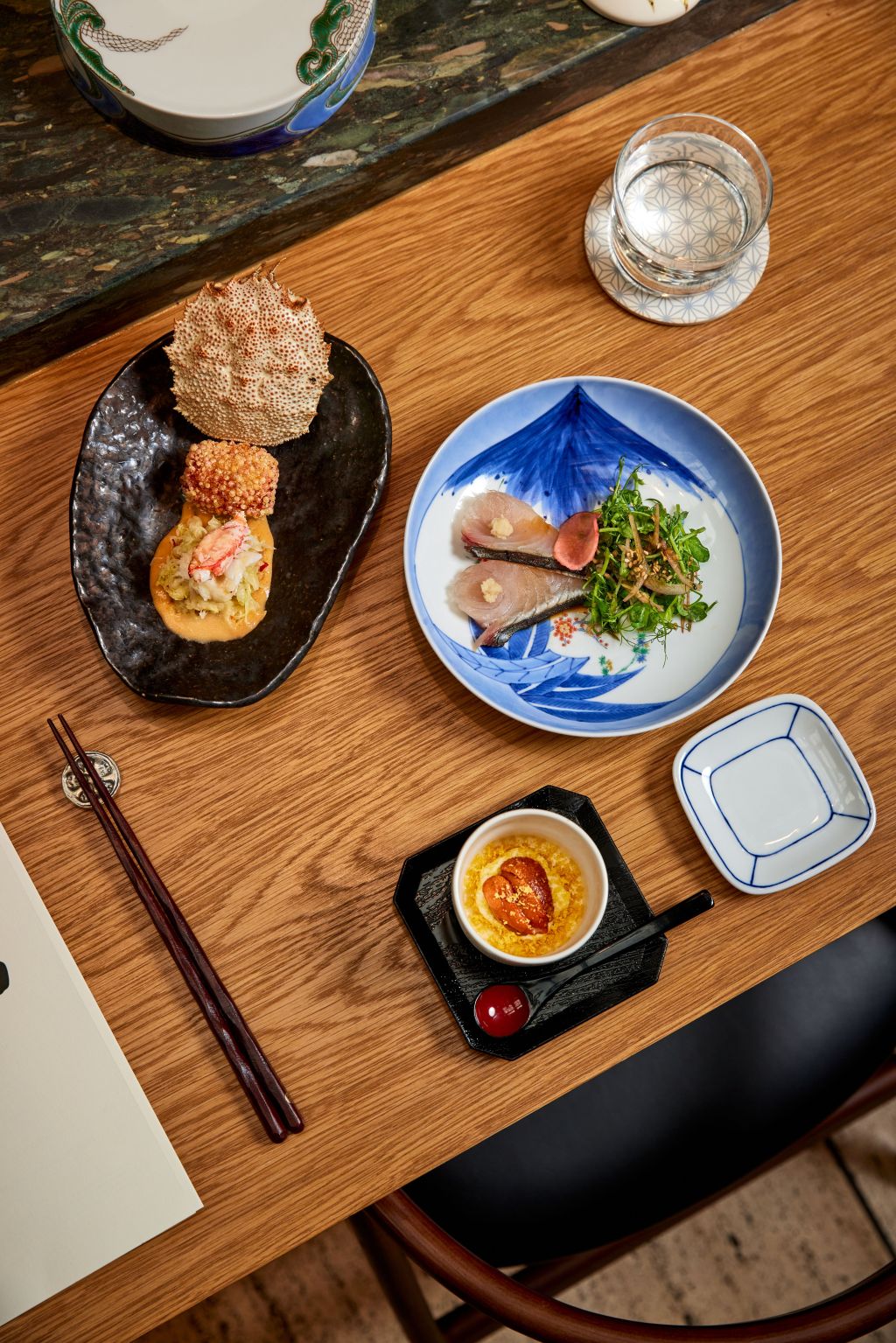
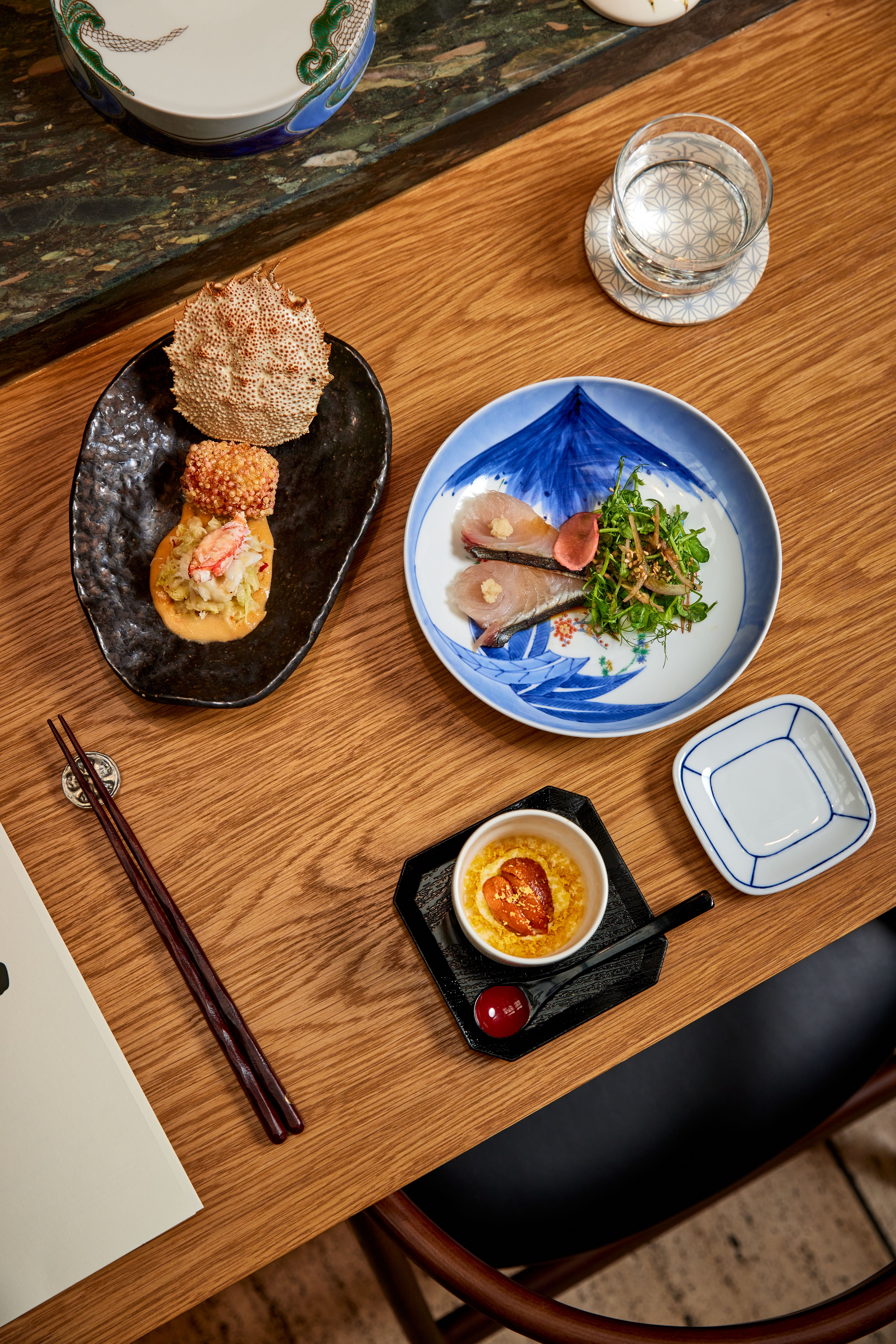
Before the nigiri came a succession of composed dishes. Tai sashimi arrived with ponzu, dill, pine nuts, kabosu mousse and persimmon, a collection of ingredients that might look rather busy on paper. Then there was chawanmushi, a Japanese steamed egg custard containing maitake mushrooms, crab, sea urchin and caviar. The kitchen was not shy about luxury. Crab, uni and caviar in one custard is a lot to ask of an egg. The following dish, amadai mizoreni, was a simpler proposition: tilefish with grated daikon and dashi. It was a welcome change in register after the crowded list of ingredients in the custard.
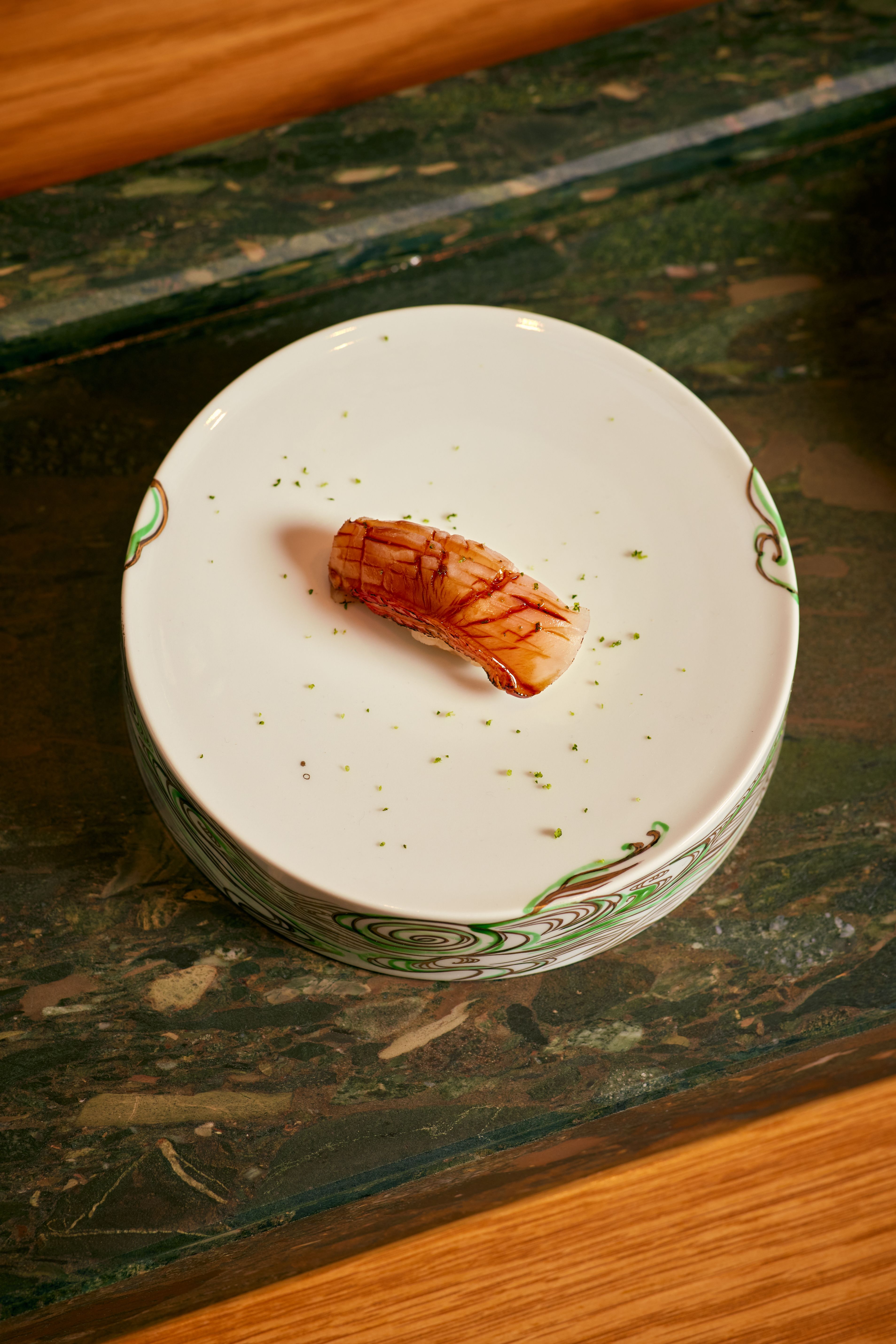
Then came the nigiri, one piece after another, each with its own character. The printed menu named cornet fish from Nagasaki and amberjack from Kagoshima, followed by mackerel from Hyogo. Scallop and sea urchin came from Hokkaido; king salmon from New Zealand; white tuna from Canada. There were two cuts of Boston bluefin tuna, lean akami and fatty otoro. The menu traced a small atlas of coastlines, but what held my attention was the changing taste and texture of the fish. Some pieces were delicate, others lush and insistent. Even the two cuts of tuna seemed to belong to different moods.
The mackerel was the best thing I ate. It had the deep, almost buttery richness I want from saba, with none of the harsh fishiness that can spoil it. Mackerel is not a timid fish; its character is the reason to order it. Here that character was vivid and beautifully controlled. I finished the piece and wanted another immediately. But the next course was already on its way, and the mackerel became something to remember.
The king salmon, listed as masunosuke and accompanied by caviar, came close. A trace of smoke arrived first, then yielded to the rich, clean flavor of the fish. Smoke can easily overwhelm salmon; here it lingered like an afterthought. Long after the piece was gone, I could still summon the taste. This was becoming the pattern of the evening: the courses disappeared quickly, but a few refused to leave my mind.
The influence of Sushi of Gari showed in the unusual accompaniments, from the pine nuts and kabosu mousse on the sashimi to the recurring caviar. I admired those flourishes. Yet the mackerel and salmon stayed with me most clearly. They needed little ornament and no explanation.
The service followed the same gentle rhythm. Courses arrived without long waits, but there was always time to enjoy what was in front of us. My nonalcoholic yuzu drink was tart and delicious beside the richer fish. Water appeared when needed; empty dishes vanished without fuss. Good service can be almost invisible, and this was. It left us with the food, the records and our conversation.
We finished with miso soup scented with chives, then vanilla-honey ice cream with kuromitsu, a dark syrup made from Japanese black sugar. The sweetness was a quiet ending to a meal that had offered plenty of richer sensations. I was comfortably full, still able to remember the individual pieces and the order in which they had arrived.
New York has grander omakase counters, among them Sushi Sho, Yoshino and Sushi Noz, where a meal can run to several hundred dollars. Each has its own appeal. What I loved about Koju was the intimacy of it: the chefs just across the counter, the music moving softly through the room, the attention returning again and again to the fish. Nothing seemed designed to impress us with its own importance.
By the standards of the city’s most lavish sushi rooms, Koju is a relative bargain. But the real distinction is harder to put on a bill. The evening had a generosity of spirit, a sense that the chefs were sharing something they loved rather than conducting a performance. I came away with a clearer memory of a few exquisite pieces than of any display of luxury.
The omakase costs $165, plus a 20 percent administration fee that the menu explicitly says is not a gratuity. That makes the food $198 per person before tax, drinks or any additional tip. It is worth knowing before you book.
When we stepped back into the Ace Hotel lobby, the crowd was still there, bent over laptops and drinks, the city carrying on as before. The counter, the music and the chefs were only a few steps behind us, yet already felt like a separate little world. I thought of the mackerel from Hyogo, its richness gone in a bite or two, and of the faint smoke that had followed the salmon. Some dinners fade on the walk home. This one seemed to grow more vivid.
Sushi Koju, Ace Hotel Brooklyn, 252 Schermerhorn St., Brooklyn. Omakase $165, plus a 20 percent administration fee, tax, drinks and any additional gratuity. sushikoju.com.
Editor’s note: Sushi Koju provided a complimentary dinner for two. Gratuity was paid separately. The restaurant had no editorial control over this review.

