Film criticism · New York Hours
Film essay · Based on verified film materials, festival notes and published reporting; not a firsthand screening review.
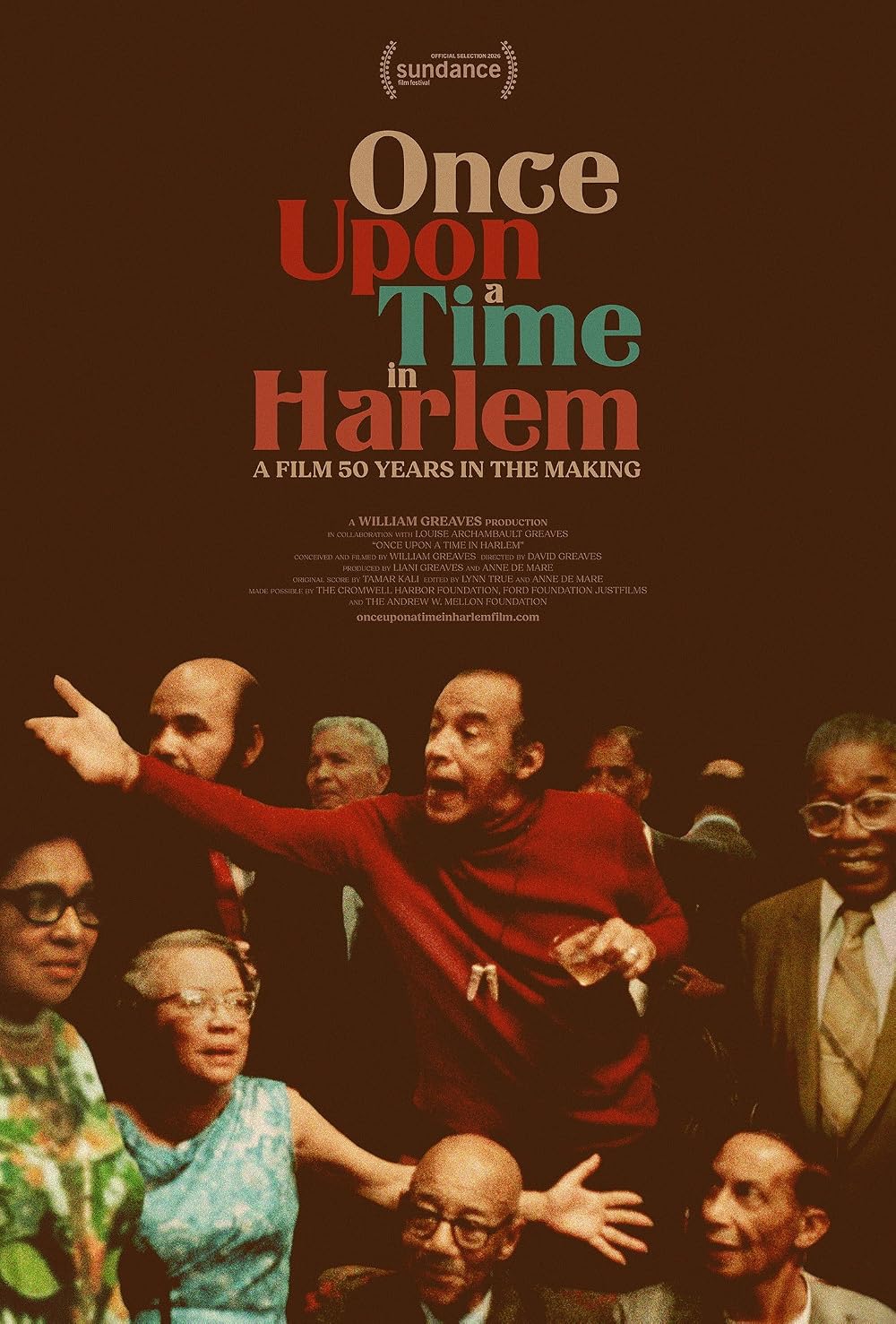
The most extravagant time machine in recent American cinema requires no elaborate machinery. It needs a room, a few chairs, a gathering of people who have lived long enough to remember another age, and a filmmaker clever enough to keep the camera running. In Once Upon a Time in Harlem, the filmmaker is William Greaves, the year is 1972, and the guests have come to Duke Ellington’s apartment. Many were part of the Harlem Renaissance. Their collective memory reaches back half a century.
Greaves was undertaking something both modest and audacious. Instead of reconstructing the 1920s through actors, he assembled people who had worked and argued and made art during those years. They had survived long enough to see their own movement become history. Now they could be asked what that history had felt like before anyone agreed on the name.
The film was completed by Greaves’s son David after his father’s death. Its arrival in theaters in 2026 makes this an extraordinary delayed encounter. Here are painter Aaron Douglas, author and artist Richard Bruce Nugent, poet Arna Bontemps, photographer James Van Der Zee and others, captured in color as participants rather than names beneath museum labels. Their mere presence does something no tidy documentary voice-over can accomplish.
There is an almost comic problem in trying to reduce such people to a coherent account. Artists dislike being organized into movements nearly as much as museums enjoy organizing them. To gather the veterans of the Harlem Renaissance in one place is to invite disputed memories, wounded pride, competing theories and the sort of social interruptions that history books quietly edit out.
That is the film’s peculiar promise. The party is not simply a collection of interviews. It is an event in which the speakers can hear one another, react, disagree and discover that the past is not a single thing they share equally. Documentary film often asks subjects to speak toward a future audience. Here, the company in the room may be just as important as whoever will eventually watch.
The setting sharpens the irony. By 1972, the Harlem Renaissance had already acquired the glow of a legendary period; the artists who helped create it were living in a city profoundly altered by politics, migration, cultural fashion and money. Their conversation belongs to two eras at once. It reaches back to the twenties while disclosing what it meant to be a Black artist in the seventies, when old assumptions were being challenged by new ones.
Greaves knew that the camera could transform the occasion it recorded. His earlier Symbiopsychotaxiplasm had treated filmmaking itself as a subject, giving the supposedly invisible machinery of production a place in the picture. The Harlem project makes a different wager: that a gathering arranged for the camera may still produce something spontaneous and unrecoverable.
No archival film can return us to its subject untouched. Time makes the surviving footage precious, and preciousness can tempt viewers to treat every sentence as a monument. What matters about this work is its resistance to that tidy impulse. These figures were not marble busts. They were people with manners, politics, jokes, grievances and a willingness to talk well past the allotted time.
The temptation is to call the film a history lesson, which is true but inadequate. It is also a record of intellectual hospitality: the astonishing things that happen when people are invited into a room because they have something to say. We can study the Harlem Renaissance through its paintings and books. Once Upon a Time in Harlem offers the rarer pleasure of hearing some of its makers speak among themselves.
Sources and film information: Film information · Additional background.

