At The Africa Center, five photographers follow the working lives of people contending with floods, drought and a vanishing shoreline.
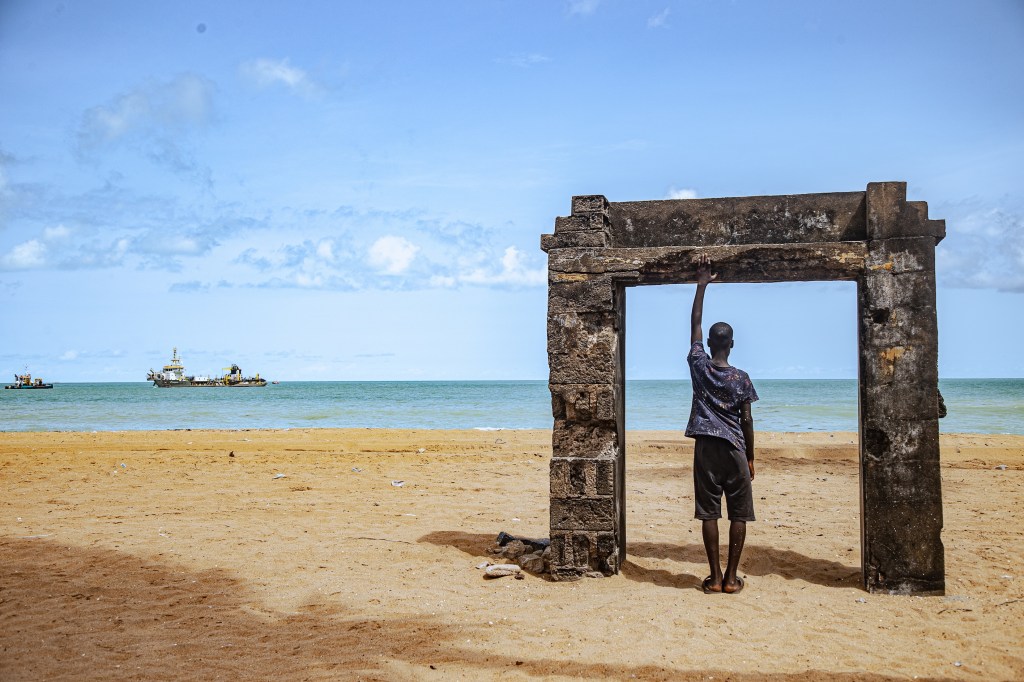
On a beach in Togo, a child reaches up to the lintel of a doorway whose house has disappeared.
The concrete frame stands alone in the sand. Through it, and on either side of it, there is sea. In Nicolas Vava’s photograph, the familiar proportions of a front door give the loss a domestic scale: this was somewhere a person could come home to. The frame still marks an entrance, though it no longer leads indoors.
The picture belongs to Stand in the Sand, one of five photographic series gathered in Lines of Survival: Living, Adapting, Imagining Tomorrow at The Africa Center, on Fifth Avenue. Presented with Africa Soft Power, the exhibition brings together the winner and four finalists of its 2026 climate storytelling prize. Originally scheduled to close November 1, it has been extended into 2027, the center confirmed, with a closing date still to be set.
For Julia DeFabo, Africa Soft Power’s curatorial lead, the differences among the photographers are essential to the exhibition. “There isn’t one story of the climate crisis or one story of human response to the crisis,” she told New York Hours. “Likewise, there isn’t one way to tell these stories.”
Along the Togolese shoreline, Vava photographs fishing nets as well as the orange netting of a government project to combat coastal erosion. DeFabo was drawn to the visual rhyme between the two. One net belongs to the work of taking something from the sea; the other marks an effort to keep the sea from taking more of the land. The doorway offers a third kind of frame, with little left for it to enclose.
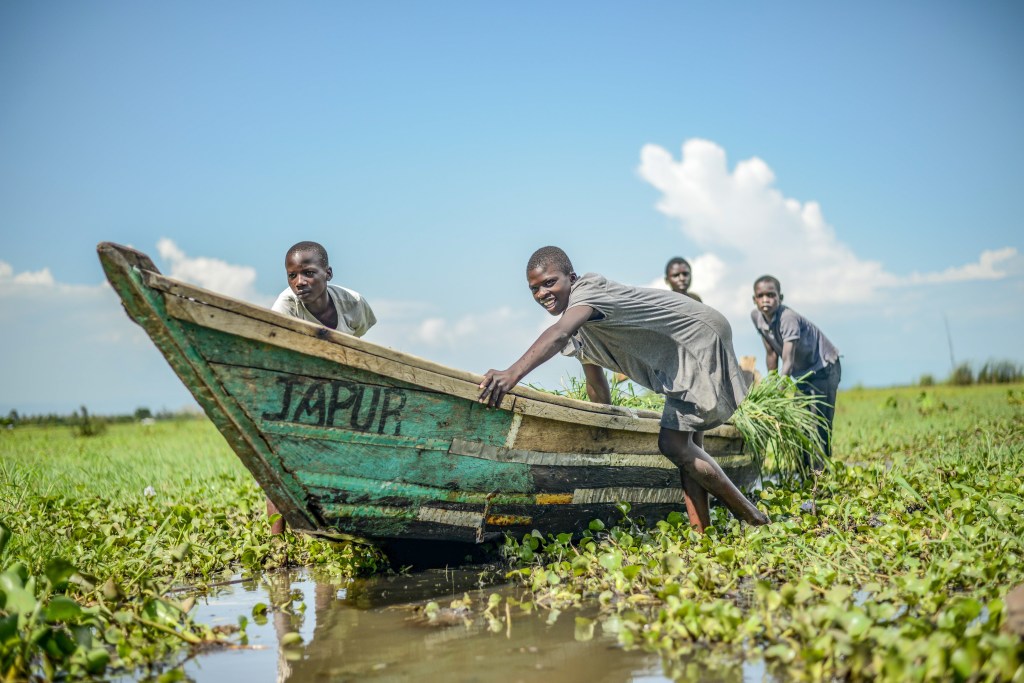
Farther east, near Lake Victoria in Kenya, the relationship with water becomes harder to sort into benefit and calamity. In Brian Ongoro’s When the Water Stays, people continue to live and work amid persistent flooding. One photograph shows a family’s home surrounded by floodwater, DeFabo said. Another depicts a fisherman in a cowboy hat, laying out his nets.
“Not everyone gets to escape these floods that were once a news story and are now a fact of daily life,” she said.
In the photograph reproduced here, a wooden boat sits among thick green aquatic plants. One person grips its side and looks toward the camera, smiling; others work behind him. The bow’s weathered boards carry the name JAPUR. There is water under the boat, though the vegetation is so dense that, at a glance, the vessel seems to have come ashore in a field.
In DeFabo’s account of the series, the water that displaces families also provides a livelihood through fishing. Leaving and staying are both more complicated than a photograph of a flooded house might first suggest.
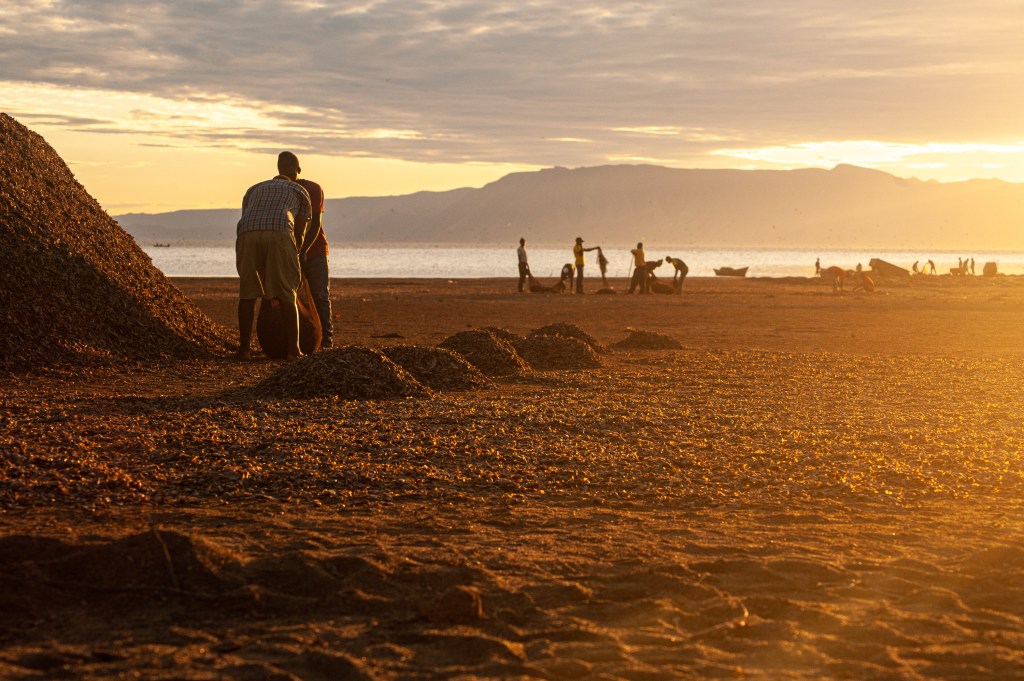
At Tanzania’s Lake Eyasi, the prospect of a good catch can itself be misleading. The Ugandan photographer Vanessa Mulondo’s The Fishermen’s Tale follows fishing practices shaped by the lake’s seasonal cycle. As DeFabo described the work, longer dry periods can concentrate fish in shallower water, making them easier to catch. But the older, more predictable rhythm of the seasons helped sustain the fishery over time. An easier day’s work may accompany a worsening future.
“Just because everything might seem okay where you live doesn’t mean that it is okay,” DeFabo said.
The thought brought her back to London, where she lives. During a stretch of sunny weather last summer, she recalled, people joked about thanking climate change for making England feel like Italy. She heard something troubling in the gratitude. A pleasant afternoon offers little guidance about what is happening to the system that produced it.
In Mulondo’s image, low sunlight turns the lakeshore gold. Two figures work beside a large heap of small fish; farther along the shore, more people are gathered near the water. The light is beautiful, and the labor continues across the frame. Knowing what DeFabo describes about the changing seasons makes the abundance harder to read.
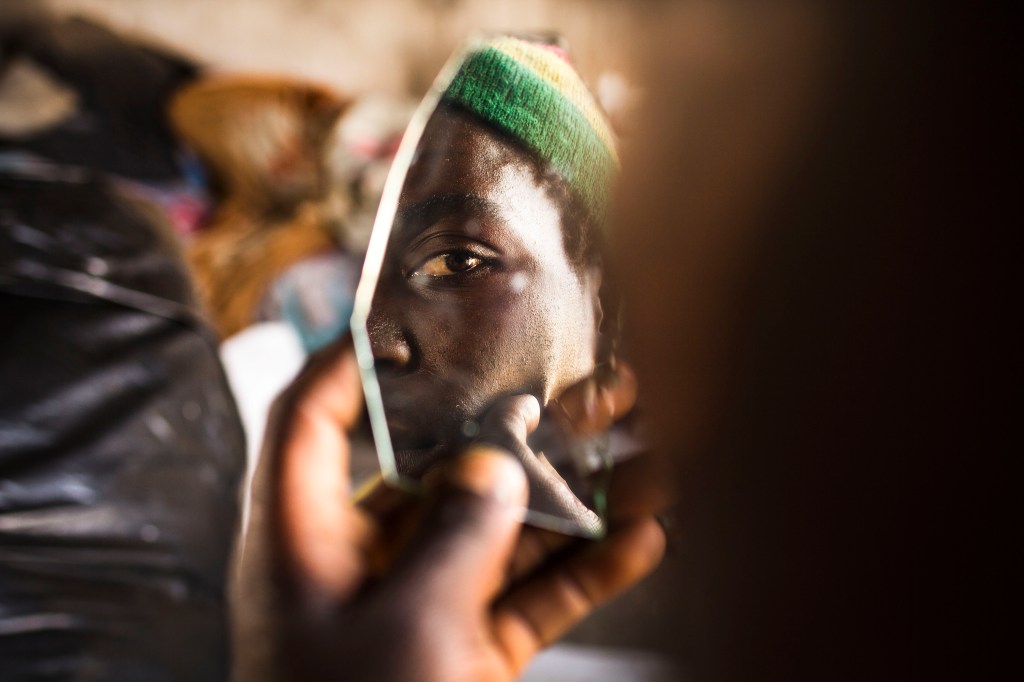
The exhibition’s winning series takes up a different form of labor. In Soweto’s Dryhook informal settlement, the South African photographer Mpumelelo Buthelezi got to know waste collectors who earn money by selling what they recover to recycling companies. His E’Plazini: A Place to Call Home for Waste Collectors considers the lives supported by that work.
One of his photographs is a close view of a face reflected in a small handheld mirror. A green knitted cap, an eye and the fingers holding the glass occupy much of the image. The background recedes into blur. Within a series about people whose work involves handling what others discard, the photograph allows a moment of private attention.
For DeFabo, the series connects ecology to the terms on which people are able to make a living. “He shows us how capitalist societies ignore their poorest communities and how these communities build livelihoods for themselves in the informal economy,” she said.
The prize was open to African and diaspora photographers ages 18 to 30. DeFabo said the judges looked for strong visual storytelling and distinct perspectives, selecting work that went beyond a record of environmental damage. The fellowship is also intended to help the photographers develop their practices and find audiences. A New York exhibition gives their pictures a public life far from the places where they were made.
The distance matters to DeFabo, though her thinking about it has changed. Earlier, she said, she might have emphasized the disparity between Africa’s low carbon emissions and the damage experienced by its communities. Now she also wants New Yorkers, facing their own experience of extreme weather, to recognize something familiar in the images.
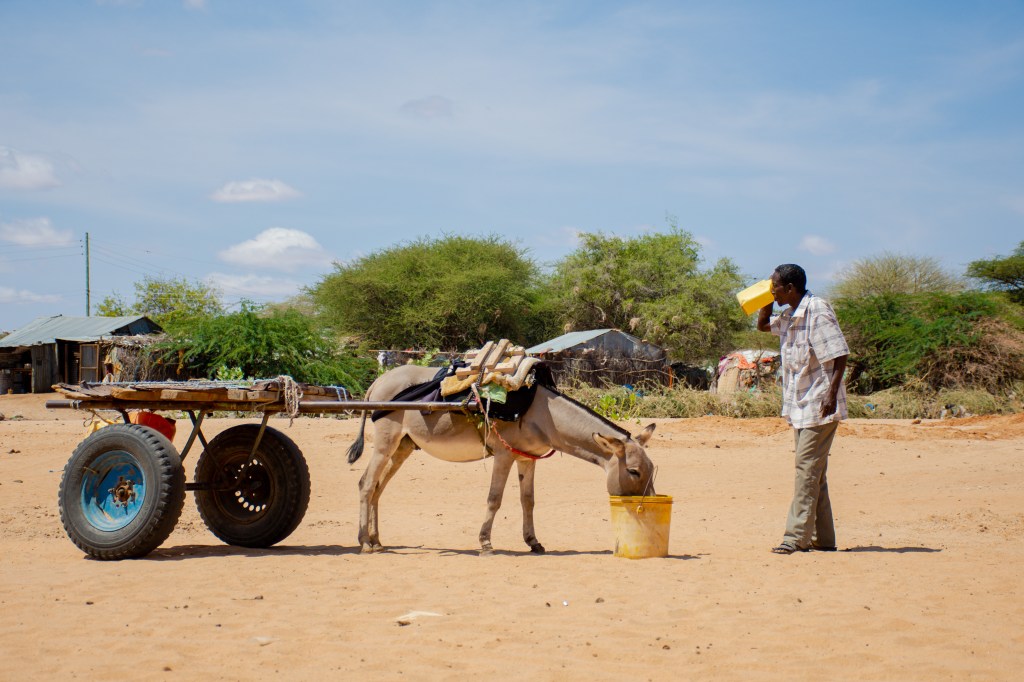
In Climate Realities, the Kenyan photographer Kevin Ochieng Onyango follows drought in the north of his country. In one picture, a man raises a yellow container to his mouth while a donkey drinks from a yellow bucket beside him. For a moment, man and donkey are occupied with the same need.
In other pictures in the series, DeFabo noted, the animals are wild, including a warthog. “The ecological crisis touches all living things,” she said.
Across these pictures, the practical questions keep returning: where to fish, what to collect, how to move a boat, where to find water. The child in Vava’s photograph has a doorway, but no room to enter.
Lines of Survival: Living, Adapting, Imagining Tomorrow is on view at The Africa Center, 1280 Fifth Avenue. Admission is free. The exhibition has been extended into 2027; a closing date has not been announced.

