For decades, Alice Cooper owned an Andy Warhol painting that he kept in his garage. It was a red image of an electric chair, rolled into a cardboard mailing tube and put away in Scottsdale, Arizona. The picture had been a birthday present, acquired in 1972 for $2,500. By the time anyone thought seriously about what it might be worth, Cooper had all but forgotten it existed.
The woman who bought it, Cindy Lang, was Cooper’s girlfriend and an acquaintance of Warhol’s downtown circle. She had appeared in the artist’s Interview magazine and knew that the Factory had paintings for sale. An electric chair seemed just right for Cooper, whose concerts included a mock execution. According to Richard Polsky, the art dealer who later examined the work, Lang looked through several unstretched canvases in a flat-file drawer and chose a red one. The subject did not appeal to many collectors. “The image was too macabre,” he said. “Most people didn’t want them.”
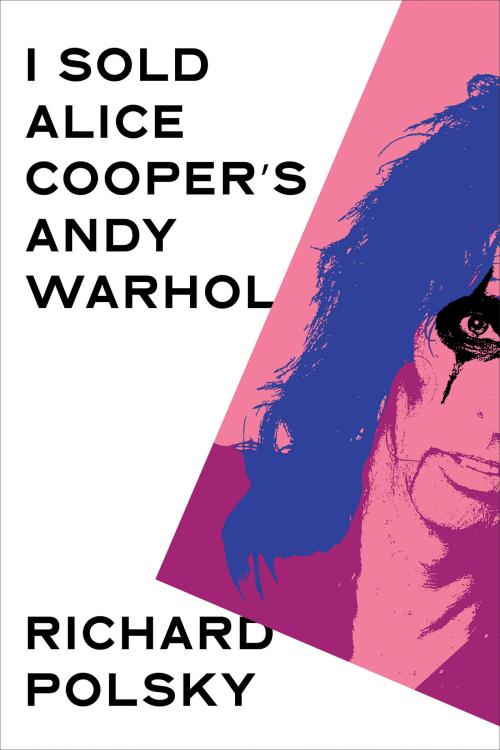
That strange afterlife is the subject of I Sold Alice Cooper’s Andy Warhol, a new book by Polsky that Other Press is publishing on November 3. His account of authenticating the long-forgotten canvas is also a story of how the art world he entered in the nineteen-seventies became a market in which paintings were treated less as objects to live with than as investments. The painting belonged to Warhol’s Death and Disaster series, whose repeated images of wrecks, suicides and electric chairs grew both more terrible and more familiar the longer one looked. Cooper knew Warhol from nights at Max’s Kansas City, but apparently thought little about the gift until a conversation on a Maui golf course with Dennis Hopper, who mentioned the money he had made selling a Warhol. Cooper’s mother helped locate the rolled-up canvas.
By 2017, Cooper’s representatives had approached Polsky to establish whether the painting was authentic. There was an obvious complication: Warhol had never signed it. Polsky says the artist often left canvases unsigned until they were sold or sent to a gallery, partly to discourage theft from his studio. The absence of a signature was therefore not decisive. Polsky examined the image, the screening and the work’s history of ownership. Everything, he concluded, pointed to a genuine Warhol.
For Polsky, the episode brought together two preoccupations: whether a painting was really what its owner believed it to be, and what that painting might be worth. He had been dealing art since the late nineteen-seventies, when buyers and sellers could afford to be a little less calculating. His earlier memoirs, I Bought Andy Warhol and I Sold Andy Warhol (Too Soon), told of his pursuit of a Warhol he could afford and his regret at selling it before its price soared.
“Back then, you got involved with this because you were fascinated by art,” he told me. Collectors had always bought and sold paintings, of course, but “there wasn’t this obsession with investment.” You acquired something because you liked it. You could wake up, look at the wall and take pleasure in the improbable fact that it belonged to you.
Polsky has particular reason to miss that world. In 1986, when he ran a San Francisco gallery called Acme Art, he arranged a Warhol exhibition and went to New York to acquire a painting directly from the artist’s studio. Warhol was represented by Leo Castelli, but he was also allowed to sell independently. Polsky picked out a small canvas bearing a dollar sign. Its retail price was $6,500; Polsky says he paid $4,500.
He hoped to persuade Warhol to come to San Francisco for the opening. The artist’s business manager, Fred Hughes, was agreeable in principle. The price was $50,000, to be paid not as a fee but through guaranteed sales of two commissioned portraits, at $25,000 apiece. Polsky protested. Hughes explained that a visit would cost Warhol three days: one to travel west, another for the party and a third to get home. Polsky could not produce two portrait buyers. The invitation went nowhere.
He did get to meet Warhol. Hughes told him to return in a couple of hours, and Warhol appeared, thin and rather taller than Polsky expected, wearing the familiar silvery wig. He listened while Polsky described the exhibition, made a little small talk and offered a few noncommittal words. After five or six minutes, the conversation was over.
Before Polsky left, Warhol signed the dollar-sign painting and dated it 1982. The work, Polsky says, had been made in 1981. “I panicked a little,” he recalled. He worried about what the discrepancy would mean when he tried to sell it, but could not bring himself to correct Warhol about his own painting. The exhibition opened on February 19, 1987. Warhol died three days later.
There is something wonderfully instructive about the wrong date. The artist appeared scarcely bothered by the particulars that would later preoccupy the people who owned his work. A dealer, meanwhile, knew how much trouble a number written in the artist’s hand could cause.
For Polsky, old New York is not quite the bohemia depicted in commemorative gallery shows. He remembers the East Village of the early eighties as shabby, improvised and frequently ridiculous. Young artists who could not break into SoHo rented cheap storefronts and displayed their own work and their friends’. Landlords let them fix up neglected spaces, then raised the rents when the leases expired. Some good artists emerged. Plenty of bad ones did, too. “There was a lot of bad art that came out of there,” he said.
One artist, whose work Polsky was considering buying, invited him to visit his studio. The studio turned out to be a disorderly apartment. The artist handed him a sledgehammer and asked him to knock down part of a wall to make more room to paint. Polsky took a few swings. He doubted the landlord had approved the renovation.
He is more affectionate about SoHo in its gallery years, when a person could spend an afternoon looking at paintings and drift into a bookstore, a café or someone’s studio. Chelsea, where many galleries later moved, struck him as cold. Now they have scattered through the city. What has disappeared, he thinks, is some of the ease with which artists, dealers and collectors encountered one another. “If you behaved yourself and did your homework, you could meet anyone back then,” he said. The encounters could turn into conversations. “There was an authenticity to all of that.”
He is wary, however, of pretending that everything was better. “My nostalgia is for the eighties,” he said. “These were the good old days for me. But were they better? I don’t know.” One thing he remembers with certainty is how much less things cost.
In I Bought Andy Warhol and I Sold Andy Warhol (Too Soon), he made a sort of comedy out of what happens when a person cares about art and its price at the same time. He remembers paying roughly $75,000 for a small green Warhol Fright Wig and selling it for $325,000. He congratulated himself on the profit. Two years later, he believes, the painting could have brought $1.5 million. An art dealer, as he observed, is in the moving business, not the storage business. The patient collector sometimes makes more money than the dealer ever can.
What troubles him now is not merely that the prices have risen. It is that he can no longer stand before certain paintings without mentally appraising them. At the Museum of Modern Art, Warhol’s Campbell’s Soup Cans make him wonder what the thirty-two canvases would fetch. The enormous price paid for a Basquiat becomes part of the experience of seeing it. “Its monetary value is now part of the visual experience,” he said. “I challenge people to say otherwise.”
Warhol, Polsky believes, would have been delighted by this development. “He’d love it,” he said. “And the reason is, Andy would be a billionaire today. And he loved money.” The man who painted dollar signs had never considered commerce an embarrassment.
Yet when I asked Polsky which Warhol he loved most, he did not mention the dollar signs, or the electric chairs, or the sums anyone might pay for them. He chose Gold Marilyn Monroe, the 1962 canvas at MoMA in which the actress’s small, brightly colored face floats in an immense field of gold. He compared it to a religious icon. “You stare at this thing,” he said. “It’s great.” He did not mention what it was worth.

