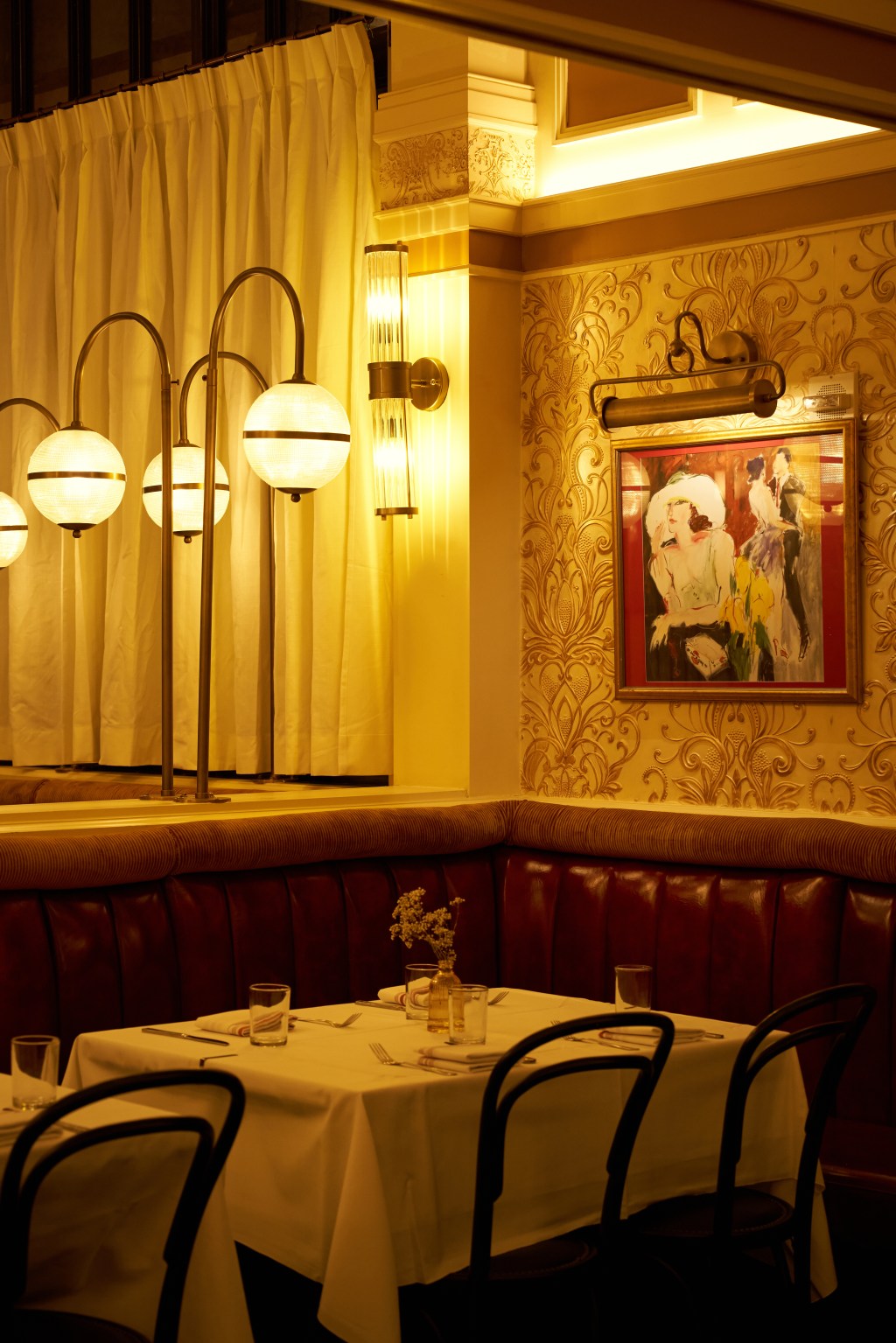
The lobby of the Ace Hotel on West 29th Street was full of young people hunched over laptops, apparently earning their living. I walked past them and into a French restaurant that looked as though it had been open since 1925.
Delphine hadn’t officially opened at all. I visited the night before its October 29 debut. Yet the place already had the comfortable air of a restaurant where generations of Parisians might have conducted their affairs over steak frites.
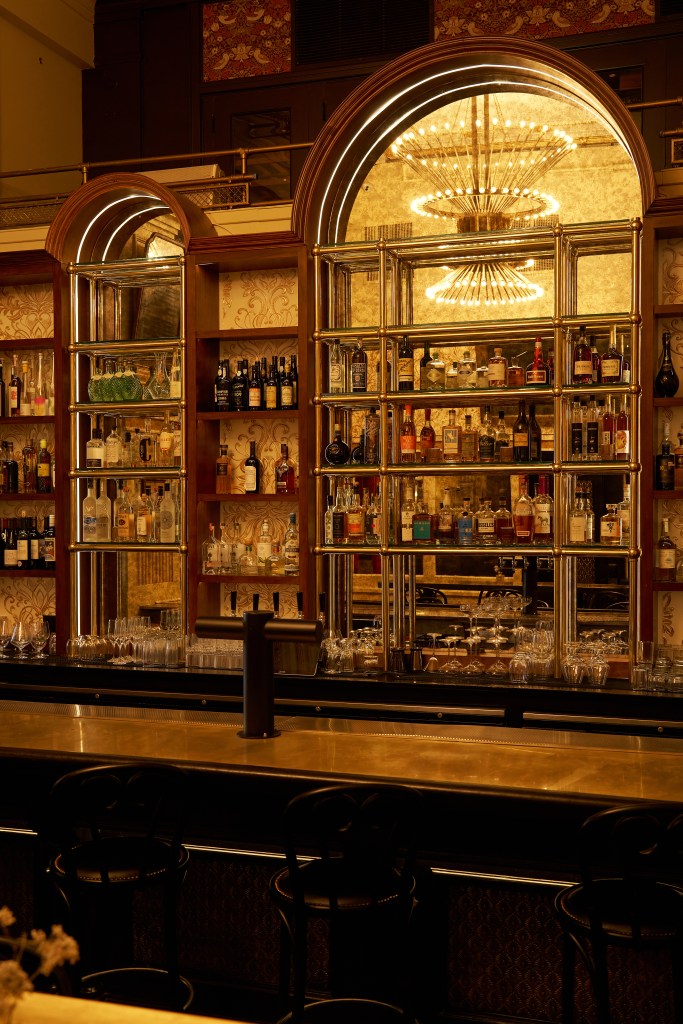
The wallpaper is ornate, the mirrors deliberately distressed, and red curtains hang beside dark wood and brass. A chandelier glitters overhead. Everything is bathed in flattering amber light. It is an elaborate bit of make-believe, but a very successful one. I was perfectly happy to go along with it.
The space has a history. It was once The Breslin, April Bloomfield’s celebrated gastropub, and later Koloman, the Austrian-influenced restaurant from chef Markus Glocker. Both left their mark. Delphine has a less complicated ambition: to make an evening in a French brasserie seem like a very good way to spend your money.
One of the first things I noticed was the music. It was good, it wasn’t too loud, and I could hear my dinner companion without leaning across the table. The room was lively, but conversation remained possible. Whoever made this decision deserves a raise.
The lighting was equally well judged. There are restaurants where you can see your dinner and restaurants where you look attractive. Delphine has somehow arranged for both. The room’s old-fashioned glamour also felt unusually relaxed. Nobody seemed to be asking the guests to admire the decor.
Four hospitality veterans are behind Delphine: Karim Amatullah, Lionel “KyKy” Conille, Mino Habib and Mathias Van Leyden. Their backgrounds include Cipriani, New York nightlife and French bistros. Chef Jarett Brodie has assembled a menu of recognizable brasserie dishes, with enough departures from tradition to keep things interesting.
I began with a Mistral cocktail, tall, cool and garnished with herbs. It was refreshing and delicious, a drink that allowed the evening to begin pleasantly without making its alcoholic presence the chief subject of conversation.
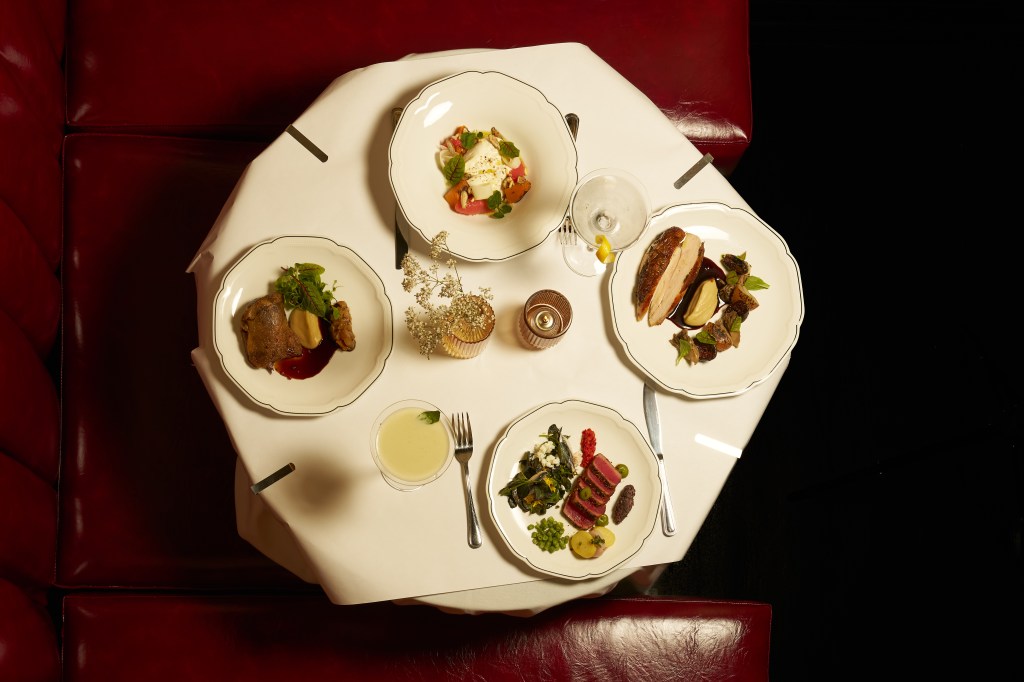
The first dish, a baby beet salad ($22), made me reconsider my usual indifference to beets. Roasted baby beets came with blood orange, grapes, smoked goat cheese and a sherry-mustard vinaigrette. The fruit lent brightness to the earthy sweetness of the beets, while the cheese added a little smoke and richness. I found myself chasing the last bits of cheese around the plate.
Twenty-two dollars is a considerable amount to pay for a beet salad. This one at least justified the kitchen’s effort, if not the economics of dining in Manhattan.
The tuna niçoise ($28) was another pleasure. Rather than tossing everything into a bowl, Brodie arranges the ingredients separately: seared ahi tuna, potatoes, green beans, olives, roasted peppers, anchovy and shaved egg, with an herb pistou.
I am generally suspicious of anything described as a deconstructed classic. A niçoise salad has been getting along perfectly well without such assistance. But the individual ingredients here were excellent, and the arrangement allowed the tuna to take center stage. It was fresh, bright and thoroughly satisfying.
Then came the steak au poivre ($54), and I stopped worrying about whether Delphine was trying too hard.
It was enormous, a handsome prime striploin beneath a dark peppercorn crust, accompanied by a generous sauce and French fries standing upright in a silver cup. The presentation had a little swagger. It deserved it.
The beef was cooked exactly as requested. The exterior was beautifully browned, and the peppercorn sauce struck the right balance between heat and richness. Too often, steak au poivre arrives either timidly seasoned or buried beneath a sauce that tastes chiefly of pepper. Brodie’s version let the beef remain the main attraction.
The fries were crisp on the outside and tender within, exactly as they should be. I liked the silver cup, too. It was an unnecessary flourish, but I had already surrendered to Delphine’s particular brand of theater.
The tea-smoked duck breast ($48) was every bit as good, and a little more surprising. It arrived sliced into thick, rosy pieces, in a portion so generous that I wondered whether the kitchen had mistaken our table for a party of four. A dish of this size can easily become a slog. This one kept my interest.
The tea smoking brought a vaguely Asian character to the duck, an aromatic undertone that seemed quite at home alongside the French cooking. I have eaten plenty of purported fusion dishes in which the ingredients appeared to have been introduced at random. This was nothing of the sort. The smoky note gave the meat another dimension without disguising what it was.
Brodie serves the duck with a celery-root and quince purée, balsamic endive, mâche and duck jus. The purée and glossy sauce supplied the richness one hopes for in a French duck dish, while the endive kept it from becoming cloying. The whole arrangement was substantial, deeply satisfying and just unusual enough to make me curious about the rest of the menu. I had expected a competent brasserie duck. I hadn’t expected one of the best dishes of the night.
The portion deserves a second mention. New York restaurant menus have developed an unfortunate habit of treating three delicate slices of meat as a main course. Nobody could accuse Delphine of that. Between the duck and the steak, the kitchen seemed determined that its guests should actually have dinner.
A side of potatoes au gratin ($18) arrived in a white oval dish with a deeply browned surface scattered with herbs. It was the sort of thing that makes the modern fashion for treating carbohydrates as a moral failing seem especially misguided.
The menu offers other temptations, including duck leg confit with fennel-apple purée, mussels with saffron and lemongrass, and a lamb burger with Fourme d’Ambert cheese that acknowledges the old Breslin. I didn’t try them, so I can’t say whether the kitchen handles everything as well as it handles the dishes I ate.
There is the matter of cost. Delphine is expensive, although hardly an outlier in its neighborhood. A couple ordering starters, mains, sides and cocktails can easily find themselves with a substantial bill. At these prices, the food needs to be very good, and so does everything surrounding it.
On this visit, both were.
It is fair to be cautious about judging a restaurant on the eve of its opening. The staff has had time to prepare, the room is full of anticipation, and the experience may be different when the paying public arrives in force. I attended a hosted preview dinner, another reason not to mistake one enjoyable evening for a definitive verdict.
Still, I have been to enough new restaurants to know that an expensive renovation and an experienced ownership group guarantee very little. Delphine managed to make its carefully assembled nostalgia feel comfortable rather than forced.
By the end of dinner, I had forgotten that the restaurant was new. I wanted another drink, more time at the table and an excuse to come back.
Outside, the laptop crowd was still at work. I was glad I hadn’t joined them.
Delphine Brasserie
16 West 29th Street, Manhattan
delphine-brasserie.com
Note: The writer attended a pre-opening dinner hosted by Delphine on October 28, 2026.

