Classical music | Preview
In Janáček’s Jenůfa, the catastrophe takes place in the name of respectability. A young woman has a child out of wedlock. Her stepmother, desperate to protect the family from disgrace, makes a choice so terrible that the opera must spend its final act asking whether forgiveness is possible.
A new staging arrives at the Metropolitan Opera on November 16, with Asmik Grigorian in the title role, Nina Stemme as the Kostelnička, Allan Clayton as Laca and Sean Panikkar as Števa. Claus Guth directs, and Tomáš Hanus makes his Met conducting debut. The production gives New York another encounter with an opera whose power comes less from spectacle than from the uneasy intimacy of village life.
Janáček understood how people sound when they cannot say what they mean. The Czech composer’s vocal lines, shaped by his study of speech rhythms, can move with startling speed between everyday conversation and emotional extremity. Nothing in Jenůfa feels comfortable for long. A remark about marriage or reputation can carry the weight of a verdict.
The title character is not simply a victim. She must reckon with what others have done to her, and with the possibility of a future that cannot erase the past. That is what makes the final scene so disquieting. A conventional opera might supply punishment or redemption as an answer; Janáček makes the audience sit with a more difficult kind of mercy.
Guth’s psychologically focused approach could make the relationships feel still more exposed. With Grigorian and Stemme sharing the stage, much will depend on the balance between the young woman’s survival and the older woman’s fear. The Kostelnička is capable of monstrous action, but an interpretation that treats her as a monster from the outset misses the opera’s cruelest insight: ordinary social rules can give monstrous acts the appearance of duty.
Opens: November 16, Metropolitan Opera House. Production and season information.
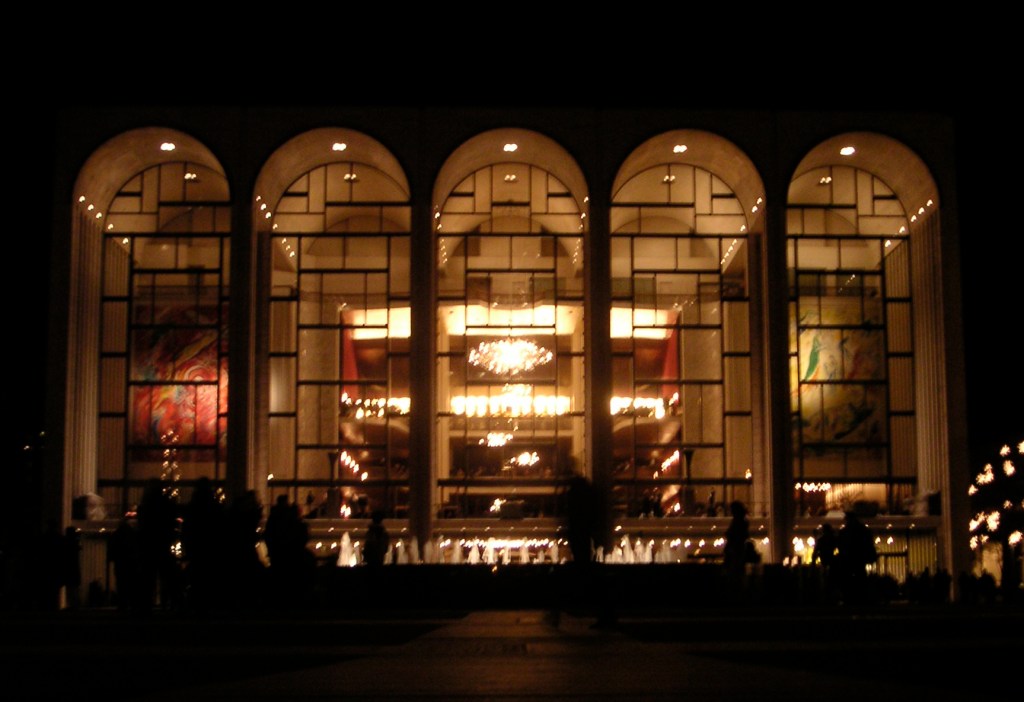
Metropolitan Opera House. Photograph: Paul Masck / Wikimedia Commons, CC BY-SA 2.5.

