
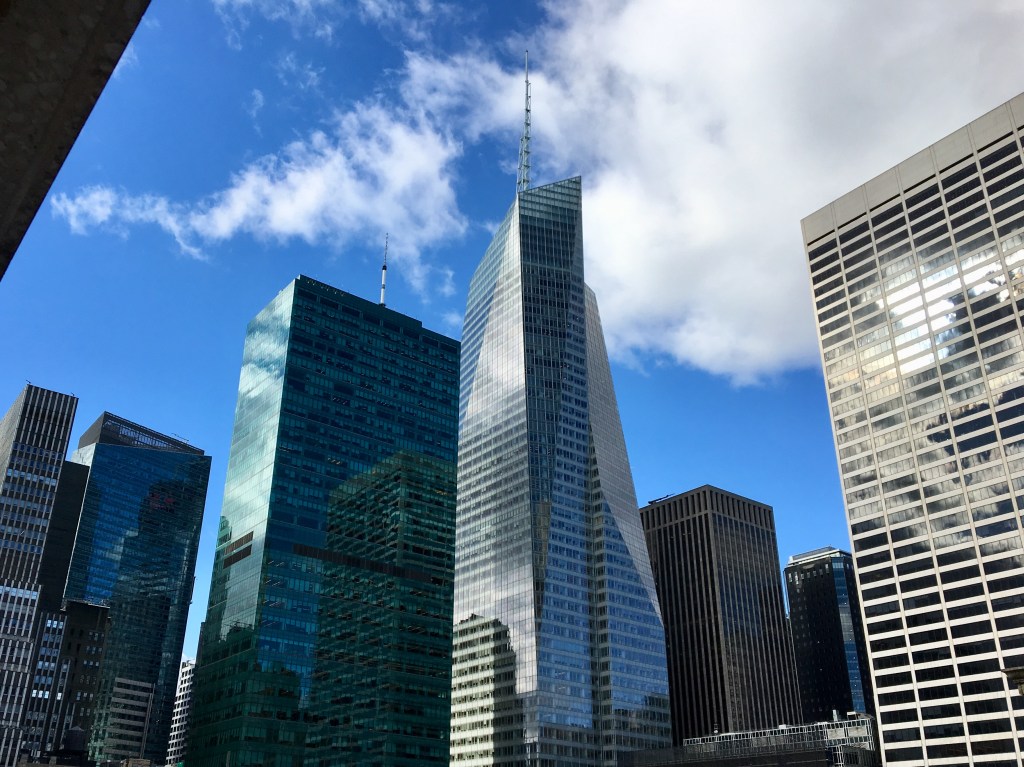
Midtown has never lacked restaurants. What it often lacks is a persuasive reason to spend an entire evening inside one. The office district’s dining culture has traditionally accommodated clients, theatergoers, hotel guests and people trying to make a train. A new Japanese dining complex at One Bryant Park is betting that some customers want a more deliberate experience.
The project opened October 15 at 135 West 42nd Street, in the former Aureole space at the Bank of America Tower. Its ambitions extend beyond a single menu: a flagship restaurant and a separate sushi counter have begun welcoming diners, while an additional concept, Kappo Sono, was still forthcoming at the initial opening, according to an opening report published that day.
The distinction between what is already operating and what remains planned is important. Restaurant openings often arrive surrounded by promises of the experience a finished project will offer. It is more useful to consider what a diner can actually book now, and what kind of evening those operating rooms intend to provide.
The flagship is overseen by culinary director Tadaaki Ishizaki and executive chef Shuji Furukawa. Its published menu includes abalone served with sea urchin sauce, Wagyu preparations and desserts involving seasonal ingredients such as persimmon and chestnut. These are not casual choices. The kitchen is presenting itself through luxury ingredients, careful sequencing and a culinary vocabulary meant to reward attention.
The separate Kumiko Room promises a more concentrated sushi-counter experience. That format changes the relationship between guest and kitchen: instead of surveying a broad dining room, a diner may focus on the preparation and service of a succession of individual pieces. The counter’s intimacy is part of the product, although the quality of any particular meal can only be judged by eating there.
The layered format belongs to a broader New York dining habit: a single address can now contain several distinct propositions, each designed for a particular mood, price point or degree of commitment. Such complexity may create excitement, but it also raises questions about identity. Is One Bryant Park a coherent restaurant, a collection of experiences or an ambitious hospitality brand that happens to share an entrance?
The building’s location makes that question especially pointed. West 42nd Street is not short of attractions, yet its traffic of office workers, tourists and theater audiences means restaurants must decide whom they are trying to persuade. A long, expensive meal is a different proposition from a pre-theater reservation squeezed between work and a curtain call.
Occupying Aureole’s former address gives the newcomers a measure of restaurant history to contend with as well. An established space can lend a new venture an air of seriousness, while inviting comparisons with an earlier establishment that developed its own place in the city’s dining memory.
The appeal of the project, at least on paper, is the possibility of escaping Midtown’s habitual haste without leaving Midtown. A diner can walk in from a crowded street and choose a meal organized around pacing, service and sustained attention. Whether the setting actually delivers that contrast is a question for firsthand reporting.
Menus built around premium ingredients also create expectations. Abalone, Wagyu and sea urchin can signal ambition, but they tell a reader relatively little about originality or skill. The most interesting judgment comes later, in the details of preparation, balance and service, none of which a press announcement can establish.
Nor does a sushi counter automatically become intimate merely because it has few seats. That atmosphere emerges from the interaction of chefs, servers and guests. The distinction matters in a city where the language of fine dining sometimes promises experiences that ordinary hospitality must still earn.
One Bryant Park therefore warrants attention less because another luxury restaurant has opened than because of what it asks diners to do. It proposes a special-occasion night in a neighborhood that many people associate with obligations rather than pleasure.
The flagship restaurant and Kumiko Room were operating at the initial opening; Kappo Sono’s availability should be checked independently. Current menus and booking information are available from One Bryant Park. This article is an advance assessment of the concept, not a restaurant review.