
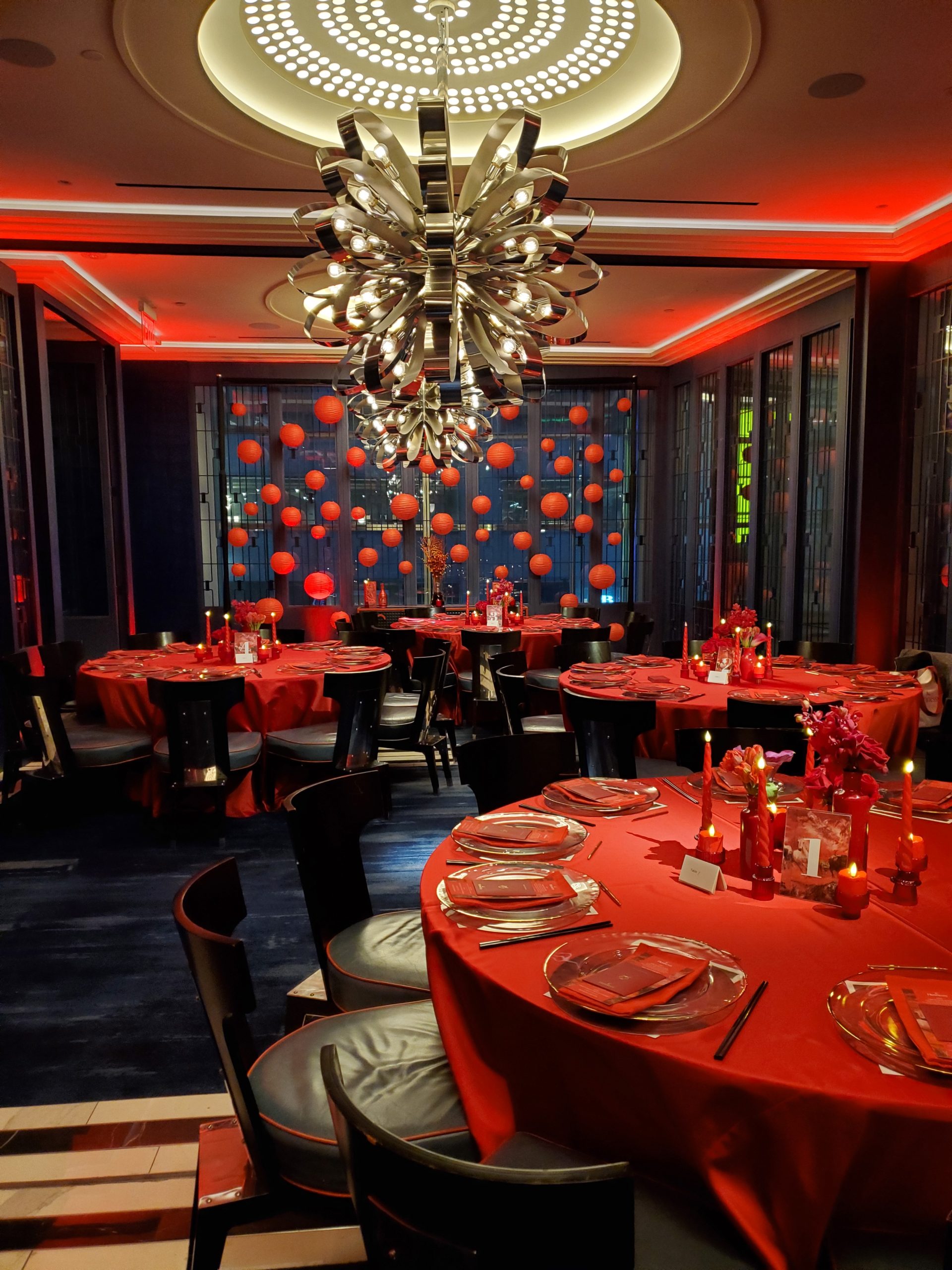
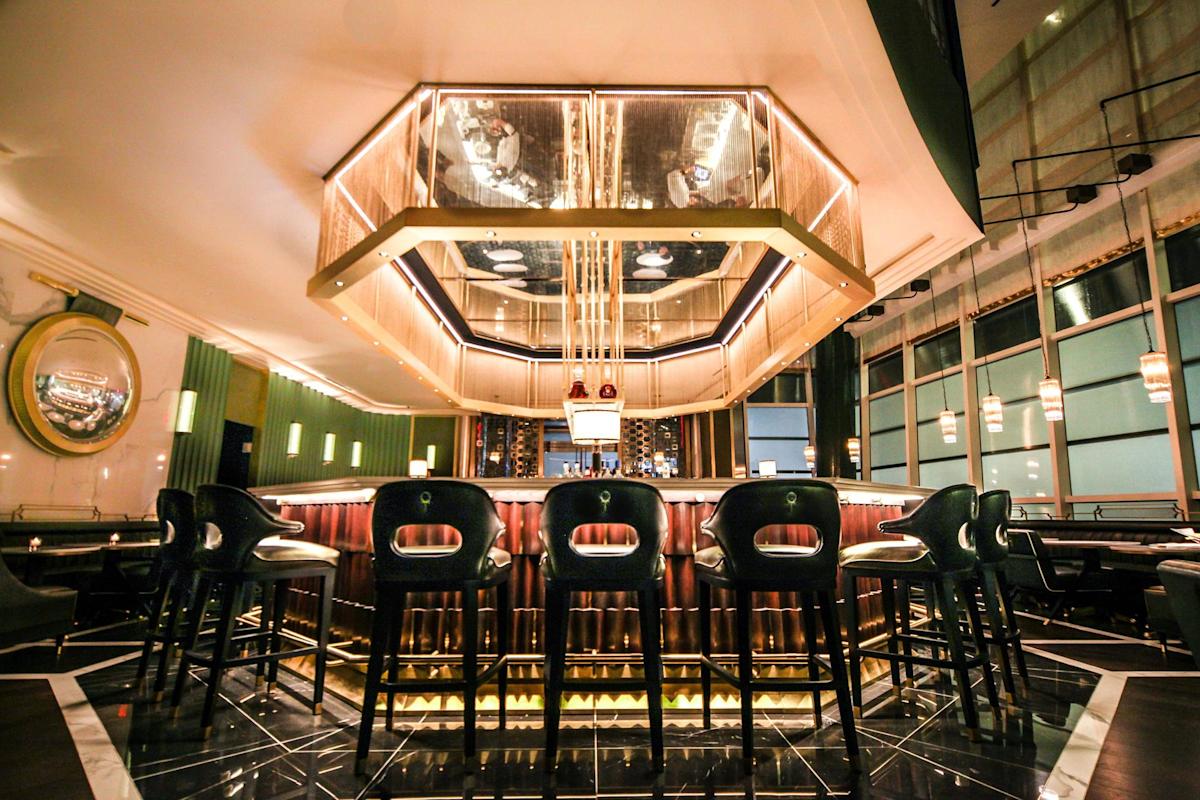
A certain kind of New York restaurant begins working on you before the first plate arrives. Hutong, installed in the base of the Bloomberg Tower at One Beacon Court, has a great deal of space and no particular inclination to be modest about it. The room is a production: dark wood, upholstered seats, stylized Chinese motifs and a bar that seems intended for people who would rather extend the evening than return to their apartments. The restaurant describes the setting as Art Deco, looking toward the New York and Shanghai of the nineteen-twenties. In Midtown East, where an expensive dinner can resemble an adjunct to an expensive job, the fantasy makes commercial sense.
The surprising thing about Hutong’s address is its history. Before the restaurant opened in 2019, the space had belonged to Le Cirque, the grand French establishment that once helped define the city’s idea of luxury dining. The succession tells a small story about Manhattan. The old hierarchy of French chefs, elaborate service and power lunches has given way to a more international version of the same performance. The clientele may still come from the surrounding towers, but the rituals now involve roast duck, Sichuan pepper and cocktails rather than soufflés and sauce boats.
Hutong belongs to Aqua Restaurant Group, whose original restaurant of the same name opened in Hong Kong. The Peking duck was the evening’s triumph. Carved at the table, it had skin of near-perfect crispness, the sort that makes the elaborate ceremony seem entirely justified. There was pleasure in watching the bird carved, but the real accomplishment was on the plate. For once, Hutong’s theatrical instincts had something exceptional to celebrate.
The restaurant advertises itself as serving contemporary Northern Chinese cooking, though its menu moves fairly freely about the map. Sichuan peppercorns appear often, including in ma la chili prawns with ginger, garlic and shredded Chinese celery. Mapo tofu appears on the lunch menu, as does kung po chicken. This is not objectionable. New York Chinese restaurants have always mixed regions, adapted their cooking to the people who could afford it and resisted tidy classifications. But “Northern Chinese” is a less useful explanation of what Hutong serves than the phrase “an internationally minded, lavishly priced Chinese dinner.”
The dish called Red Lantern makes the restaurant’s aesthetic almost comically explicit. Soft-shell crab appears among dried red chilies in a presentation that resembles a small, vivid stage set. The chilies are not merely there to heat the dish; their presence makes the plate legible from across the room. There is nothing inherently wrong with a dish that wants to be seen. The question is whether the diner is being asked to admire an arrangement or eat something memorable. A good Sichuan preparation can be thrilling without architectural assistance, its heat building and receding while the peppercorn’s numbing, floral quality refuses to stay politely in the background.
Dim sum is another of Hutong’s calling cards, although the offerings read rather differently from the menu of a neighborhood teahouse. Lobster squid-ink dumplings sit alongside wagyu beef mille-feuille, while mushroom buns and vegetable dumplings offer a less ostentatious route through the kitchen. One can almost hear the meeting in which somebody decided that a dumpling would become more persuasive with lobster inside it. Yet dumplings are among the least forgiving of foods. Wrapper thickness, moisture, seasoning and temperature can undo the good intentions of a costly filling. Luxury is an ingredient, not an accomplishment.
The kitchen is capable, at least on paper, of something quieter. There is steamed red snapper with peppers and soy sauce, fried rice punctuated by chopped pickled vegetables and four-season beans cooked with chili, minced pork and dried baby shrimp. These may not make the most flattering photographs, but they suggest more interesting ways of judging the restaurant. The pleasures of Chinese cooking often depend on a kind of precision that does not announce itself: the timing of a wok, the balance of vinegar and heat, a vegetable that retains its snap. Such matters tend to get lost when the duck is on fire.
Price changes the stakes. Hutong lists a weekday lunch at $38 for an appetizer, main and side, an unusual opportunity to approach the place without surrendering the better part of an evening’s entertainment budget. The choices include vegetable hot-and-sour soup, poached chicken in chili broth and spring rolls, followed by such mains as mapo tofu, prawns or steamed snapper. A supplemental charge brings in beef tenderloin, scallops or duck. At lunch, the dining room could be useful for a more ordinary purpose: a place to meet somebody and eat.
At dinner, the calculation is quite different. The posted tasting menu costs $148 a person, with a $68 wine pairing, and adds $30 a person for Peking duck. It begins with crab salad and Chinese lettuce in Sichuan peppercorn essence, moves through a parade of spring roll, squid-ink dumpling and wagyu pastry, and eventually reaches snapper, beef and fried rice. There is a dessert involving sesame, salted caramel and soy-milk ice cream. The sequence sounds designed to guarantee the absence of boredom. It also risks giving every course the same job: to impress.
The restaurant now offers a $78 Emperor Dinner, another way of buying into its world without assembling an extravagant à la carte meal. More interesting, perhaps, is the fact that Hutong has developed several versions of itself: executive lunch, grand dinner, weekend dim sum, bar, private celebration. It can be a restaurant, a meeting place or a venue. Its 2019 arrival in the old Le Cirque space may have sounded like a sharp break with the past, but the business model is recognizably old Midtown. The room must be adaptable enough for birthdays and negotiations, proposals and corporate expense accounts.
This is not to say that Hutong has no place in the city’s Chinese dining life. On the contrary, one welcome development in New York is the refusal to confine ambitious Chinese food to the narrow economic expectations long imposed on it. There is no reason that a Peking duck should be less worthy of a splendid dining room than a roast chicken served under a French name. Chinese restaurants should be allowed extravagance, pretension, eccentricity and failure in precisely the same measure as any other. Equality includes the right to charge too much for dinner.
But the comparison cuts both ways. A fine dining room should sharpen critical expectations, not suspend them. At these prices, the food has to justify the evening independently of the lighting. The appeal of duck skin is its brittle richness, not the waiter’s performance; the reason to order ma la prawns is the pungent, electric combination of chili and pepper, not their dramatic appearance. One hopes for a kitchen willing to let the ingredients make their own argument.
Hutong is perhaps best understood as a destination for an occasion, rather than a place to which one would turn from habit. Its scale, polished decoration and broad menu suit a birthday party, an elaborate first date or a visiting relative in need of the New York experience. The cooking borrows from several Chinese regional traditions, though the overall language is that of international luxury. No one is pretending that this is the modest restaurant around the corner where a family has been making noodles for fifty years.
The interesting test of Hutong lies somewhere between a flourish and a forkful. The restaurant has inherited a room once associated with a particularly New York form of grandeur and given it an entirely different repertoire. It has not abandoned the old ambition to make dinner feel important. The challenge, now as before, is to make the meal live up to the room.
Hutong, 731 Lexington Avenue, One Beacon Court, Midtown East. Menus and restaurant information. Prices are those on the restaurant’s published menus. This essay discusses the restaurant’s setting, history and offerings; it does not represent unverified dishes as firsthand tastings.